

In this article
- Common irritable bowel syndrome (IBS) symptoms
- Common IBS triggers and amplifiers
- What can you do during an IBS flare?
- IBS red flags: when to seek medical care
- How to prepare for an IBS appointment
- IBS subtypes and bowel patterns
- How clinicians assess possible IBS
- A personalised approach to managing IBS
- Why IBS is called a disorder of gut–brain interaction
- Create a personal IBS flare plan before you need it
- Managing IBS at work, while travelling and when eating out
Common irritable bowel syndrome (IBS) symptoms
IBS patterns vary. Some people notice mainly pain and constipation; others experience urgency and loose stools. The presence of symptoms alone does not confirm IBS.
- Abdominal pain or cramping related to bowel movements.
- Bloating or visible abdominal distension.
- Diarrhoea, constipation or an alternating pattern.
- Urgency, straining or a feeling of incomplete emptying.
- Symptoms that fluctuate rather than staying identical every day.
Common IBS triggers and amplifiers
| Possible trigger | Possible effect | What to track |
|---|---|---|
| Fermentable foods | Gas, bloating, pain or urgency | Ingredient, portion and timing |
| Large or high-fat meals | Fullness or altered motility | Meal size and symptom onset |
| Caffeine or alcohol | Urgency or looser stools | Amount and timing |
| Poor sleep or stress | Greater sensitivity or symptom flare | Sleep duration and stress context |
| Irregular eating | Large portions and less predictable symptoms | Meal gaps and routine |
What can you do during an IBS flare?
- 1
Return to familiar meals
Choose foods and portions you already know you tolerate rather than starting a new restrictive plan.
- 2
Keep fluids steady
Replace fluids if stools are loose; ask a clinician about individual needs if you have another medical condition.
- 3
Record the context
Note sleep, stress, bowel pattern, meals and medication changes.
- 4
Review repeats—not blame
One meal may coincide with a flare without causing it. Look for recurring combinations.
IBS red flags: when to seek medical care
Contact a healthcare professional for blood in stool, unexplained weight loss, anaemia, persistent vomiting, fever, symptoms waking you at night, a new lasting change in bowel habits or a strong family history of bowel disease. Seek urgent care for severe or rapidly worsening symptoms.
How to prepare for an IBS appointment
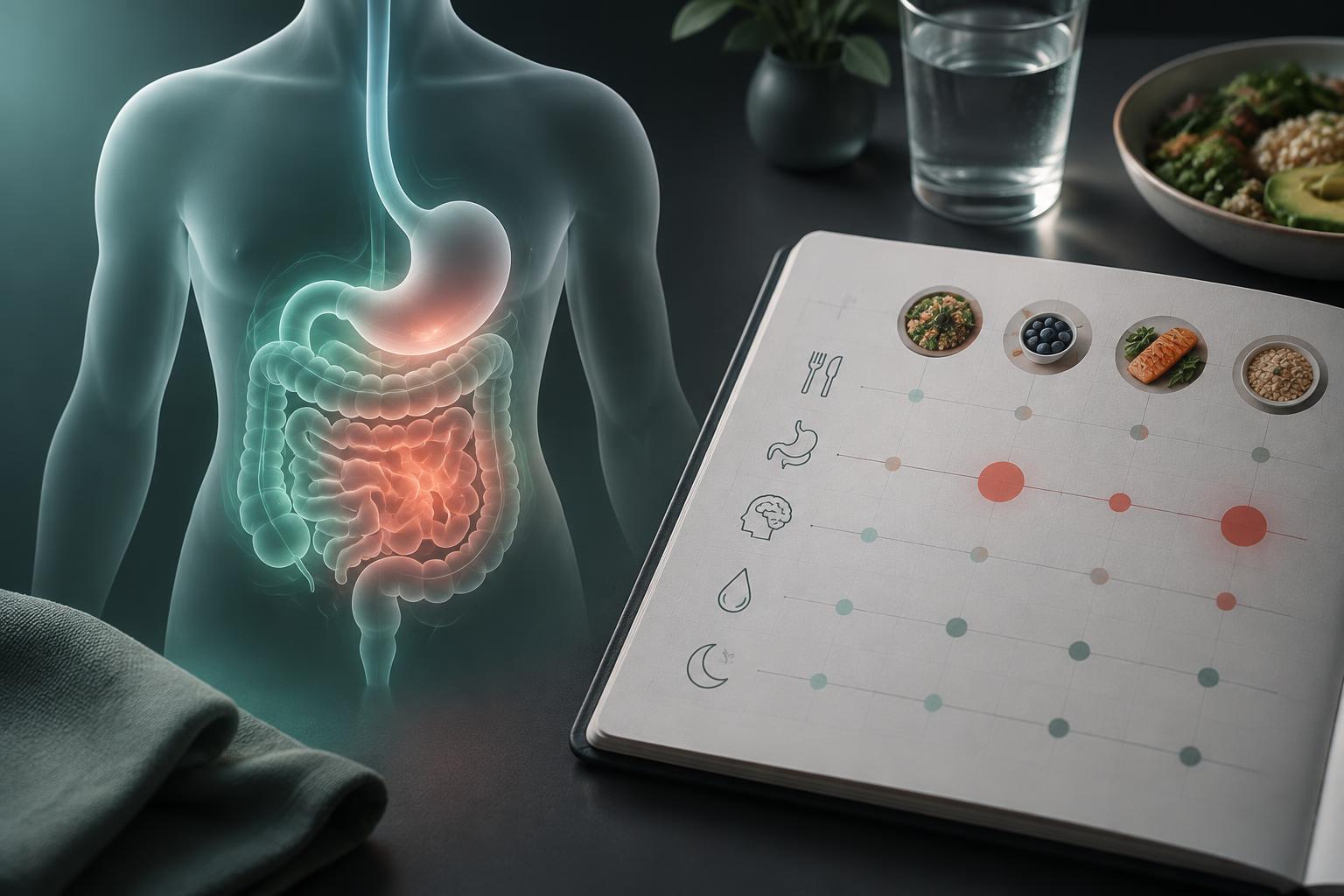
An IBS symptom tracker can turn "it has been bad lately" into dates, stool types and possible associations. Gut Pace lets you log symptoms, Bristol stool type, meals, sleep and stress over several weeks and generate a report to bring to your appointment. It supports the conversation with your clinician; it does not diagnose IBS.
- Bring a short timeline of symptoms and bowel changes.
- Record stool form, pain, urgency and bloating consistently.
- List medications, supplements and recent dietary changes.
- Note any weight change, bleeding, fever or night symptoms.
- Write down the questions you most want answered.
Learn how food and symptom tracking creates a clearer history
IBS subtypes and bowel patterns
Clinicians may describe IBS according to the stool pattern that occurs most often. The subtype can change over time and helps guide management; it does not measure how serious a person's symptoms feel.
| Subtype | Typical pattern | What to record |
|---|---|---|
| IBS-C | Constipation-predominant | Hard stools, straining and frequency |
| IBS-D | Diarrhoea-predominant | Loose stools, urgency and timing |
| IBS-M | Mixed constipation and diarrhoea | When and how the pattern switches |
| IBS-U | Pattern does not fit the other groups | Stool form and symptoms over time |
How clinicians assess possible IBS
There is no single scan or blood test that confirms IBS. Assessment starts with the symptom pattern, medical history and examination. Depending on the situation, a clinician may arrange tests to look for anaemia, inflammation, coeliac disease or another explanation.
Do not remove gluten before discussing coeliac testing, because dietary changes can affect the usefulness of the result. Tell the clinician about medicines, supplements, family history, travel and recent infections.
A personalised approach to managing IBS
Management depends on the dominant symptoms, medical history and personal priorities. Options may include meal-pattern changes, an appropriate fibre adjustment, medicines for specific symptoms, a professionally guided low-FODMAP trial or gut-directed psychological therapies.
No single plan works for every subtype. Introduce one manageable change, define what improvement would look like and review the result rather than escalating several restrictions at once.
| Approach | What it may target | Why guidance matters |
|---|---|---|
| Meal and fibre adjustment | Regularity, constipation or meal-related symptoms | Fibre type and pace affect tolerance |
| Low-FODMAP process | Selected food-trigger patterns | Restriction should lead to reintroduction |
| Symptom-specific medicine | Pain, constipation or diarrhoea | Choice depends on symptoms and health history |
| Gut–brain therapy | Stress-linked symptoms and coping | It supports a real gut–brain pathway; symptoms are not imaginary |
Why IBS is called a disorder of gut–brain interaction
IBS involves changes in how the digestive tract and nervous system communicate. Gut movement, sensitivity, immune signals, microbial activity and the brain’s processing of internal sensations can all contribute. The balance differs between people.
This model explains why symptoms are real even when routine scans appear normal. It also explains why stress can amplify symptoms without being their sole cause, and why both digestive and gut-directed psychological treatments may be useful.
The term does not imply that IBS is imagined. It describes a biological communication system and supports a personalised approach rather than searching for one universal trigger.
Create a personal IBS flare plan before you need it
A flare plan separates safe, familiar actions from decisions that need clinical guidance. It can include simple meals you already tolerate, hydration, access to prescribed or pharmacist-advised medicine, gentle movement and a reminder of your red flags.
Avoid responding to every flare with a new elimination diet. Review whether the episode followed illness, travel, constipation, a menstrual-cycle change, poor sleep or a medication change. If the pattern differs from your usual IBS, seek advice rather than assuming it is another flare.
| Part of the plan | Example | Safety boundary |
|---|---|---|
| Food | Familiar meals that maintain adequate intake | Do not fast or keep narrowing the diet |
| Fluids | Regular drinks appropriate to your needs | Persistent vomiting or dehydration needs care |
| Medicines | Previously advised symptom-specific option | Do not exceed directions or borrow medicine |
| Routine | Rest, gentle movement and toilet access | Severe pain or faintness is not self-care territory |
| Review | Log onset, stool changes and likely context | New or progressive symptoms need assessment |
Managing IBS at work, while travelling and when eating out
Planning can reduce practical stress without making life revolve around symptoms. At work, identify toilet access, keep a familiar snack available and avoid skipping meals before an important meeting if long gaps usually make symptoms harder.
For travel, pack medicines already recommended for you, maintain fluids and expect that schedule changes may affect bowel habits. When eating out, ask simple ingredient questions and choose a familiar meal when needed, but avoid assuming that every restaurant meal will trigger a flare.
If IBS repeatedly prevents work, travel, relationships or adequate eating, tell your clinician. Impact on daily life is important clinical information and can justify a broader management discussion.
- Keep a short summary of your diagnosed condition and current medicines.
- Use accessible toilet planning as support, not as proof that danger is imminent.
- Maintain regular meals where practical during travel.
- Review patterns after the event rather than restricting pre-emptively.
- Ask for professional support if anxiety and avoidance are expanding.
At a glance
Key takeaways
- IBS is a recurring symptom pattern that requires clinical diagnosis.
- Pain, bowel changes, bloating and urgency are common but not specific to IBS.
- Food, portions, stress, sleep and routine can interact as triggers.
- A structured log can improve a medical conversation without diagnosing the cause.
- Bleeding, weight loss, anaemia, fever, vomiting or night symptoms require medical attention.
Frequently asked questions
How do I know if I have IBS?
Recurring pain with bowel changes may fit IBS, but only a clinician can diagnose it and consider other causes.
What foods trigger IBS symptoms?
Triggers vary. Fermentable carbohydrates, large fatty meals, caffeine and alcohol are common examples, but portion and context matter.
Can stress cause an IBS flare?
Stress can influence gut movement and sensitivity through gut–brain communication. That does not make symptoms imaginary.
When should I worry about IBS symptoms?
Seek care for bleeding, unexplained weight loss, anaemia, persistent vomiting, fever, night symptoms or a new lasting bowel change.
Can an app diagnose IBS?
No. Gut Pace can organise symptom patterns and support discussion with a healthcare professional, but it cannot diagnose a medical condition.
Is IBS the same as inflammatory bowel disease?
No. IBS and inflammatory bowel disease are different conditions. Similar symptoms can occur, so a clinician should assess ongoing or concerning changes.
Can IBS be diagnosed with one blood test or scan?
No single test confirms IBS. Clinicians use the symptom pattern and may arrange tests to rule out other causes.
Can IBS begin after a stomach infection?
Some people develop a lasting IBS pattern after gastroenteritis, known as post-infectious IBS. New ongoing symptoms still need clinical assessment.
Editorial information
Reviewed by the Gut Pace Editorial Team for responsible symptom language and consistency with NIDDK, NHS and NICE guidance. No medical reviewer or diagnosis is implied.
Last reviewed: Sep 12, 2026
Sources & further reading
- NIDDK — Symptoms and causes of IBS
- NHS — Irritable bowel syndrome
- NICE — Irritable bowel syndrome
- NIDDK — Diagnosis of IBS
- PubMed — ACG clinical guideline for IBS
- NIDDK — Crohn’s disease
This article is for general information only and is not medical advice. It does not diagnose or treat any condition. Speak with a doctor or registered dietitian about persistent, severe or concerning symptoms.