
In this article
Why bloating may build through the day
A flatter abdomen in the morning and fuller feeling by evening can reflect normal food and fluid volume. Fermentation also takes time, so symptoms may appear hours after the relevant food.
Painful, persistent or progressive swelling is different from ordinary daily variation and should not be dismissed.
| Possible contributor | Typical clue | Useful comparison |
|---|---|---|
| Food volume | Fullness rises after larger meals | Compare portion and pace |
| Fermentation | Gas develops hours later | Review earlier meals |
| Constipation | Bloating with hard or infrequent stool | Track bowel pattern |
| Meal timing | Discomfort after late heavy meals | Compare an earlier similar meal |
| Sensitivity | Strong sensation without large visible change | Include sleep and stress |
Look at the whole day, not dinner alone
- Breakfast and lunch ingredients
- Total portions and snack stacking
- Carbonated drinks, gum and straws
- Bowel movements over several days
- Sleep, stress and menstrual-cycle context
Four safe comparisons to try
- 1
Record onset
Note when bloating begins and whether it is sensation, visible distension or both.
- 2
Keep meals recognisable
Avoid changing the entire day at once.
- 3
Compare meal timing
Try a similar dinner earlier without reducing nutrition.
- 4
Review bowel pattern
Include constipation instead of treating every episode as a food reaction.
A useful evening-bloating diary
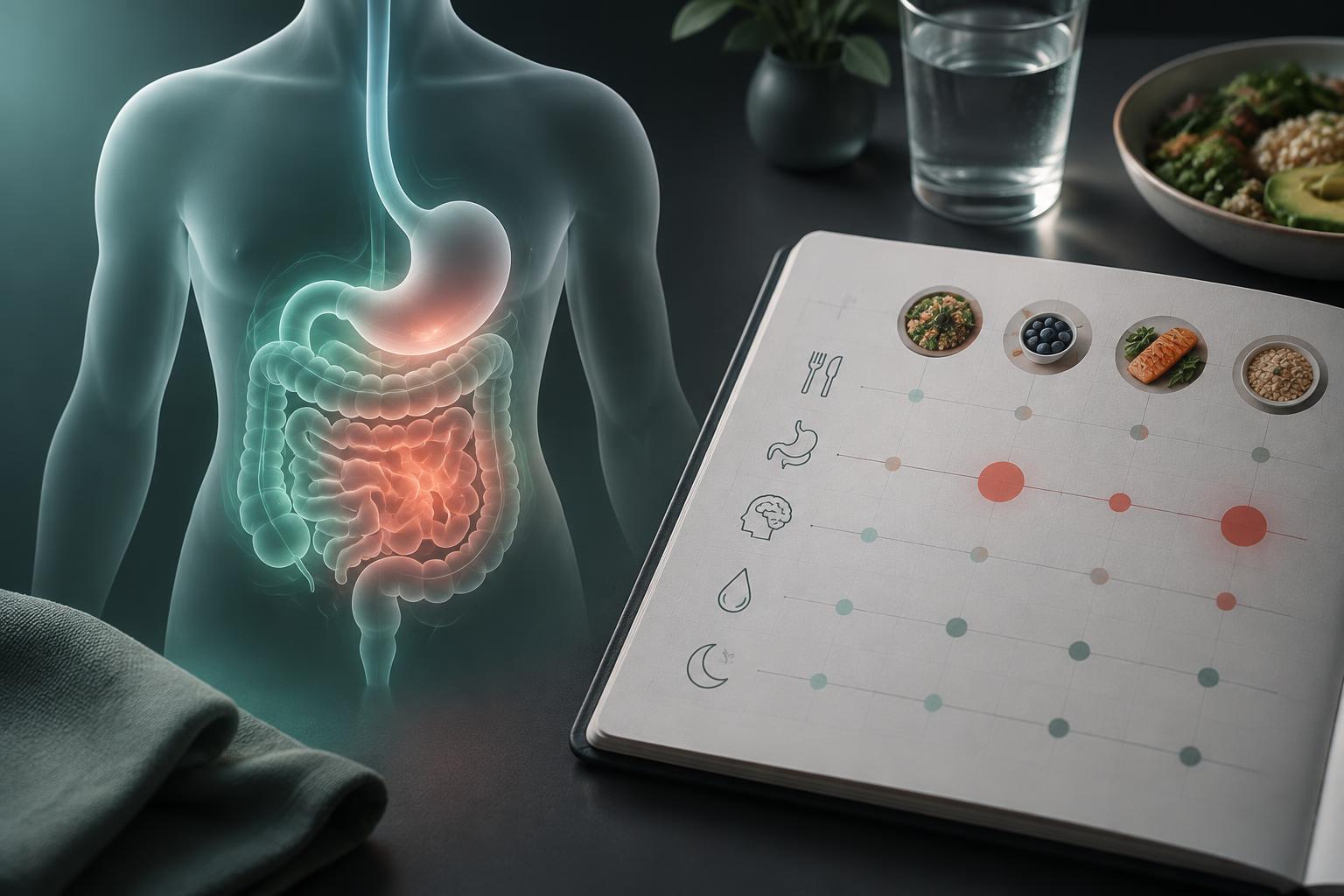
Evening bloating is often the end of a whole day, which is why a diary that only covers dinner can mislead you. Because Gut Pace places breakfast, lunch, drinks, sleep and the time your bloating started on a single timeline, it becomes easier to see whether the evening symptom follows a late meal, a long gap without food or a short night before.
| Record | Example | Why |
|---|---|---|
| Severity | 0–10 and impact | Shows trend |
| Onset | Started at 4 pm | Links earlier context |
| Meals | Ingredients and portions | Captures stacking |
| Stool | Form and frequency | Adds constipation context |
| Wider context | Sleep, stress, cycle | Explains day-to-day variation |
Avoid turning evening bloating into a long food-ban list
Removing every fermentable food may reduce symptoms temporarily while also shrinking nutritional variety. Test one specific question, portion or combination instead.
A dietitian can help when many foods seem implicated or eating is becoming stressful.
When bloating needs medical advice
A diary can support the conversation but cannot rule out coeliac disease, inflammatory bowel disease, ovarian conditions or other causes.
At a glance
Key takeaways
- Evening bloating often reflects the whole day.
- Food volume, fermentation and constipation can overlap.
- Symptom timing may lag behind the relevant meal.
- Test one comparison rather than restricting broadly.
- Persistent or concerning swelling needs assessment.
Frequently asked questions
Is it normal to be more bloated at night?
Some increase after a full day of eating can be normal, but painful, worsening or persistent bloating deserves advice.
Why am I flat in the morning and bloated at night?
Food and fluid volume, gas production and stool can accumulate through the day.
Does dinner always cause nighttime bloating?
No. Earlier meals, portions, constipation and wider context may contribute.
Can constipation cause evening bloating?
Yes. Stool retention can make fullness and distension more noticeable.
Should I skip dinner to reduce bloating?
Skipping meals is not a good diagnostic strategy. Compare timing, portions and ingredients while maintaining adequate nutrition.
Can stress make bloating feel worse?
Stress can influence sensitivity and gut function, though it should not be used to dismiss physical symptoms.
When is bloating urgent?
Severe pain, vomiting, significant swelling, bleeding, faintness or inability to pass stool or gas may need urgent care.
Editorial information
Reviewed by the Gut Pace Editorial Team for evidence-informed wording, practical clarity and appropriate medical-safety guidance.
Last reviewed: Sep 12, 2026
Sources & further reading
- NIDDK — Eating, diet and nutrition for IBS
- NHS — Bloating
- NIDDK — Your digestive system and how it works
This article is for general information only and is not medical advice. It does not diagnose or treat any condition. Speak with a doctor or registered dietitian about persistent, severe or concerning symptoms.