
In this article
- How sleep and gut health influence each other
- Sleep and digestion patterns worth tracking
- How to break the sleep–gut cycle
- When sleep or digestive symptoms need help
- The gut–brain axis and body clock in plain English
- Sleep signals worth comparing with digestion
- Evening factors that can affect both sleep and digestion
- How to track sleep and gut symptoms together
- Sleep quality is more than the number of hours
- Shift work, travel and irregular schedules
- A two-week sleep-and-digestion experiment
How sleep and gut health influence each other
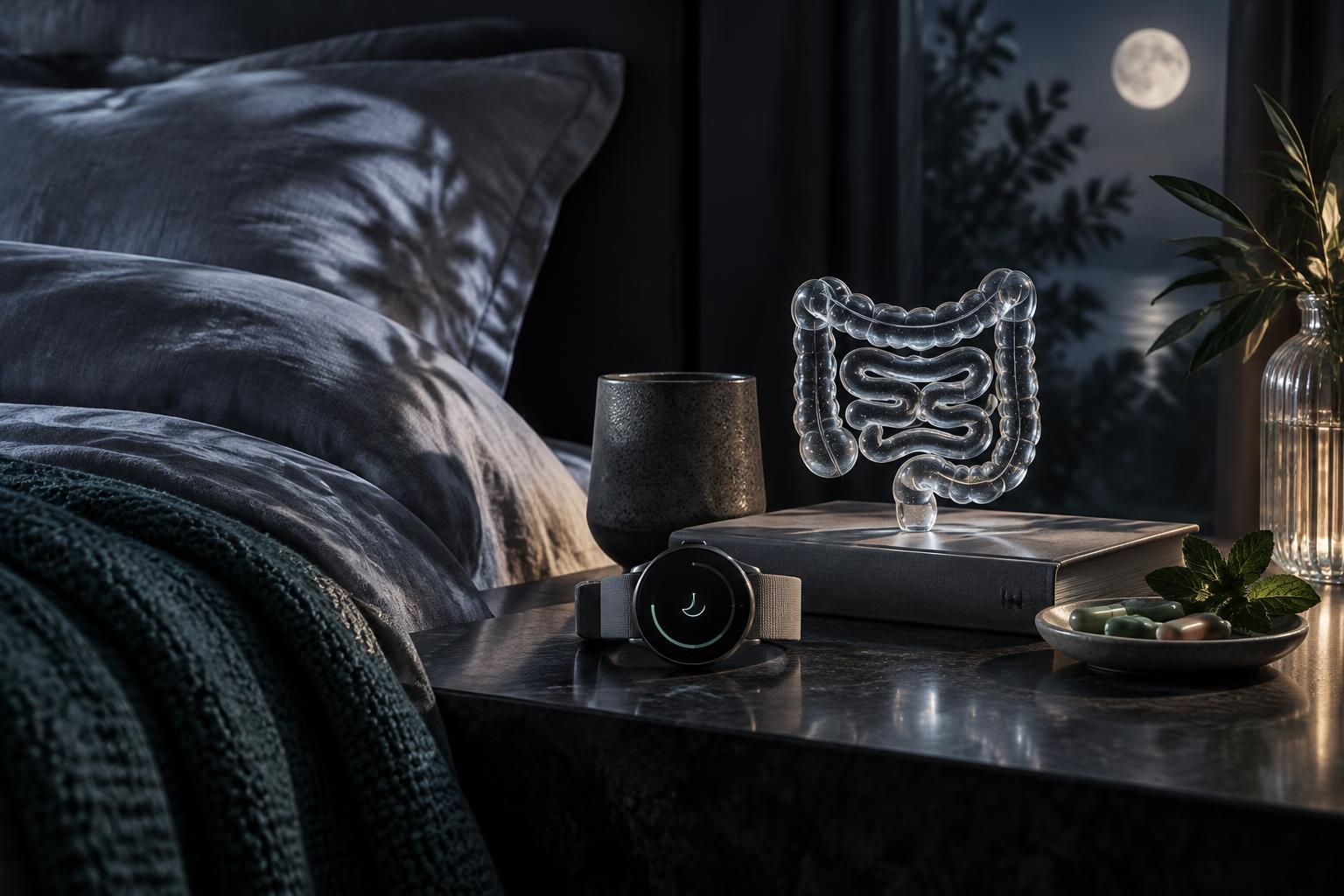
Research describes a two-way relationship rather than a simple one-cause rule. Sleep affects stress, pain processing, appetite and daily routines; digestive discomfort can make it harder to fall asleep or stay asleep.
A poor night does not automatically cause a flare. Look for repeated differences between your better- and worse-sleep periods.
Sleep and digestion patterns worth tracking
| Pattern | Possible connection | Useful context |
|---|---|---|
| Late heavy dinner | Fullness, reflux or disturbed sleep | Meal time and portion |
| Short sleep | Greater symptom sensitivity next day | Sleep duration and pain score |
| Alcohol in evening | Fragmented sleep and bowel changes | Amount and timing |
| Stressful day | Both sleep and gut symptoms may change | Stress note and symptom onset |
How to break the sleep–gut cycle
- 1
Anchor your wake time
A consistent start to the day can be easier to maintain than forcing an exact bedtime.
- 2
Move the last large meal earlier
Test timing without changing every ingredient at once.
- 3
Build a quiet wind-down
Reduce stimulation and leave time between eating and lying down.
- 4
Compare weekly patterns
Review sleep and symptoms together rather than reacting to one bad night.
When sleep or digestive symptoms need help
Speak with a healthcare professional about persistent insomnia, loud snoring or breathing pauses, severe daytime sleepiness, pain that wakes you, bleeding, unexplained weight loss or ongoing bowel changes.
The gut–brain axis and body clock in plain English
The gut and brain exchange signals through nerves, hormones and immune pathways. Sleep also follows a circadian rhythm that helps organise appetite, alertness and daily routines. These systems overlap, which makes a two-way relationship plausible without proving that one poor night directly causes a digestive flare.
Stress can alter attention to body sensations and gut movement, while pain or urgency can make sleep harder. Symptoms are physical even when stress is one of several amplifiers.
Sleep signals worth comparing with digestion
| Signal | What it may reflect | How to log it |
|---|---|---|
| Time to fall asleep | Evening arousal or routine | A simple estimate |
| Total sleep | Overall sleep opportunity | Manual note or wearable trend |
| Night waking | Disruption, including from symptoms | Count and likely reason |
| Morning gut symptoms | How you feel after the prior night | Type, timing and severity |
| Last meal timing | Possible fullness or reflux context | Meal time and portion |
| Resting heart rate or HRV | General recovery trend | Use trends, not diagnosis |
Evening factors that can affect both sleep and digestion
A large late meal can increase fullness or reflux for some people, while alcohol may fragment sleep and caffeine can delay sleep onset. Shift work, travel and irregular bedtimes can also change several variables at once.
| Factor | Possible connection | Question for your log |
|---|---|---|
| Late large meal | Fullness or reflux when lying down | Was dinner later or larger than usual? |
| Alcohol | Fragmented sleep and digestive irritation | How much and how close to bed? |
| Caffeine | Delayed or lighter sleep | Was it used later than normal? |
| Stress | Arousal and altered symptom sensitivity | Was there an unusual stressor? |
| Irregular schedule | Changes sleep timing and meal routine | Was this a shift-work or travel day? |
How to track sleep and gut symptoms together
If you use Apple Health or Samsung Health, Gut Pace can bring your sleep data in automatically; otherwise you can log sleep yourself. With nights and symptoms on the same timeline, it becomes easier to see whether short or broken sleep tends to come before more uncomfortable days — an association to explore, not proof of cause.
- 1
Record a baseline
Log normal sleep timing and gut symptoms for at least a week without forcing changes.
- 2
Compare better and worse nights
Look at next-day symptoms, meal timing and stress rather than sleep duration alone.
- 3
Test one evening change
Move a large meal earlier or adjust caffeine timing while other routines stay similar.
- 4
Review several weeks
Repeated patterns are more useful than a single poor night or flare.
Sleep quality is more than the number of hours
Total sleep time is useful, but timing, continuity and how rested you feel also matter. Two people reporting seven hours may have very different nights if one had repeated waking or a schedule far outside their normal rhythm.
Wearables estimate sleep from movement and heart signals; they are not the same as a clinical sleep study. Use trends as context rather than treating a single sleep-stage score as a diagnosis.
A brief morning note—bedtime, estimated waking, disruptions and how rested you feel—may be enough for gut-pattern tracking. More data is not automatically better if it increases worry.
| Sleep measure | Useful interpretation | Common overinterpretation |
|---|---|---|
| Total sleep | Approximate opportunity and duration | One target fits everyone |
| Night waking | Frequency and likely cause | Every waking is abnormal |
| Sleep timing | Consistency relative to your routine | A late night directly caused one symptom |
| Rested feeling | Functional context for the next day | It proves a sleep disorder |
| Wearable stages | Longer-term directional estimate | Consumer data equals a clinical test |
Shift work, travel and irregular schedules
Shift work can alter sleep timing, meal timing, caffeine use and access to familiar foods simultaneously. Travel may add time-zone changes, dehydration, prolonged sitting and a different toilet routine. These bundled changes make a single-food explanation less likely.
Choose anchors you can control: a repeatable wind-down cue, light exposure that matches your schedule, regular fluid intake and a small set of familiar meals. Change one anchor at a time where possible.
People who are excessively sleepy while driving or operating machinery need urgent safety changes and medical advice. Persistent insomnia, loud snoring, choking or witnessed breathing pauses also deserve assessment.
- Log work or travel timing beside sleep and gut symptoms.
- Avoid using escalating caffeine late in your intended waking period.
- Plan familiar food options without skipping whole shifts of meals.
- Expect bowel timing to need adjustment after major schedule changes.
- Prioritise safety over completing a tracking experiment.
A two-week sleep-and-digestion experiment
Start with several baseline days, then choose one realistic sleep-supportive change. Examples include moving caffeine earlier, keeping a steadier waking time or finishing a very large evening meal earlier when medically appropriate.
Keep the rest of your routine as stable as real life allows. Record sleep timing, disruptions, morning symptoms, bowel pattern and the selected evening factor. At the end, compare several days rather than looking for a perfect sequence.
If the change is helpful and sustainable, continue it. If the pattern is unclear, do not stack several new rules at once. Tracking is meant to support a decision, not create a test you can fail.
- 1
Choose one outcome
For example, morning bloating severity or night waking from reflux.
- 2
Record baseline
Observe several ordinary days without forcing improvement.
- 3
Test one change
Keep it specific, safe and realistic for a full week.
- 4
Compare and decide
Keep, adapt or stop based on repeated patterns and daily-life impact.
At a glance
Key takeaways
- Sleep and digestive symptoms can reinforce each other.
- The relationship is individual and does not prove one direct cause.
- Meal timing, alcohol, stress and routine can affect both sides of the pattern.
- Compare trends across several weeks rather than one night.
- Persistent sleep or digestive problems deserve professional advice.
Frequently asked questions
Can lack of sleep cause digestive problems?
Poor sleep may influence stress responses and symptom sensitivity, but digestive symptoms usually have several interacting causes.
Does poor sleep make IBS worse?
Many people report a connection, and research supports a bidirectional relationship. Tracking can help show whether that pattern applies to you.
Can eating late affect sleep and digestion?
A large late meal may contribute to fullness or reflux for some people. Test timing gradually and consider medical advice for persistent symptoms.
Should I trust wearable sleep data?
Use it for trends rather than diagnosis. Device estimates can complement, not replace, how rested you feel and professional assessment.
Why do I wake up feeling bloated?
Possible contributors include the previous evening meal, constipation, swallowed air or overnight changes in sensation. A repeated or concerning pattern deserves medical advice.
Does melatonin improve gut symptoms?
Evidence is limited and condition-specific. Discuss supplements with a clinician, especially if you use medicines or have another health condition.
How long should I track sleep and gut symptoms together?
Several consistent weeks are usually more informative than a few nights. Seek care sooner for severe symptoms, breathing pauses or repeated waking from pain.
Editorial information
Reviewed by the Gut Pace Editorial Team with cautious interpretation of emerging sleep–gut research and clear limits on wearable data.
Last reviewed: Sep 12, 2026
Sources & further reading
- NHLBI — Sleep deprivation and deficiency
- PubMed — Sleep, immunity and gastrointestinal disorders
- NIGMS — Circadian rhythms
- NHLBI — Healthy sleep habits
- NHLBI — Sleep apnoea
This article is for general information only and is not medical advice. It does not diagnose or treat any condition. Speak with a doctor or registered dietitian about persistent, severe or concerning symptoms.