
In this article
- What does eating for gut health actually mean?
- Understanding your gut and the gut microbiome
- What makes a diet gut-friendly?
- Fibre: an important part of digestive health
- Prebiotics: food for beneficial gut microorganisms
- Probiotics and fermented foods
- Fruits and vegetables for gut health
- Whole grains, legumes, nuts and seeds
- Hydration and your diet
- Foods and eating patterns that may trigger symptoms
- Understanding FODMAPs and individual food tolerance
- How to build a balanced, gut-friendly plate
- How stress, sleep and lifestyle affect your relationship with food
- How a gut health app helps you understand your diet
- A sample one-day gut-friendly eating plan
- Common gut-healthy diet mistakes
- When to seek professional advice
- Conclusion: find an approach that works for your gut
What does eating for gut health actually mean?
Maybe you feel bloated after some meals but not others. Perhaps you have scrolled through social media and found one person swearing by a green powder, another banning gluten, and a third insisting everyone should eat thirty plants a week. When advice conflicts this much, it is reasonable to wonder what a gut-healthy diet actually is.
The honest answer is that it is not one rigid meal plan. For most people, eating for gut health means a few steady principles: dietary variety, an appropriate amount of fibre, enough fluid, adequate overall nutrition, and foods that suit your individual needs and tolerance. Two people can both eat well for their gut while eating quite different meals.
It also helps to be clear about what a gut-healthy diet is not. It is not a detox, a cleanse, or a list of foods you must never eat again. It is not expensive superfoods, and it is not the same for someone with IBS as for someone with no digestive symptoms at all.
Gut Pace is a gut health app designed around this reality. Rather than telling you one perfect diet, it helps you record your food choices and digestive experiences so you can review them together and learn what eating for gut health means for you specifically. Throughout this guide, we will show where that kind of tracking fits — and where its limits are.
Understanding your gut and the gut microbiome
Digestion is a team effort across several organs. The stomach mixes food with acid and enzymes and begins breaking it down. The small intestine is where most nutrients are absorbed into the bloodstream. The large intestine, or colon, reabsorbs water and is home to the gut microbiome — the trillions of bacteria and other microorganisms that live mainly there.
These microbes are not passengers. They ferment fibres and other compounds your body cannot digest alone, producing substances such as short-chain fatty acids that interact with the gut lining. The gut also houses much of the immune system, and research continues to explore how microbes, the gut lining and immune signalling influence one another.
It is worth being cautious, though. Microbiome science is genuinely complex, and researchers have not identified one ideal microbiome that everyone should aim for. Be sceptical of any product, supplement or single food that claims to fix every gut problem — the evidence rarely supports promises that simple.
Gut Pace connection: the app does not measure your microbiome, and no food diary can. What it can do is help you keep organised food and symptom records, so your everyday digestive experiences become visible and reviewable rather than a blur of memory.
What makes a diet gut-friendly?
Across nutrition guidance, a few principles come up again and again. A gut-friendly diet is usually a varied and balanced one: a range of fruits and vegetables, whole grains and suitable fibre sources, legumes, nuts and seeds when tolerated, adequate protein and other essential nutrients, and enough fluid through the day.
Just as important, the pattern has to fit your real life. An eating routine you can keep on a busy Tuesday matters more than a perfect plan you abandon by Thursday. Meal timing, portion sizes and your own tolerance all shape how a diet actually feels in your gut.
There is no single perfect diet for everyone. Someone with lactose intolerance, someone with IBS, and someone with no symptoms at all may all need different versions of healthy eating. That is why observation beats assumption.
Meal logging — by photo with the AI food scanner or by voice — builds a record of what you actually eat, not what you meant to eat. Reviewing a week of logged meals makes dietary variety easy to see, and placing symptoms on the same timeline shows how different meals relate to how you felt.
- Variety: different plant foods provide different fibres and nutrients.
- Whole grains and suitable fibre sources, increased gradually.
- Legumes, nuts and seeds when you tolerate them.
- Adequate protein, fluids and overall energy for your needs.
- A routine that fits your schedule rather than fighting it.
Fibre: an important part of digestive health
Dietary fibre is the part of plant foods your body cannot fully digest, and it matters for digestion in several ways. Soluble fibre — found in oats, apples, citrus, beans and lentils — absorbs water and forms a soft gel that can help stools stay comfortable to pass. Insoluble fibre — found in whole grains, nuts, seeds and the skins of many vegetables — adds bulk and helps material move through the bowel.
Fibre also feeds gut microbes, which ferment it in the colon. That fermentation is normal and useful, but it produces gas — which is why suddenly doubling your fibre intake can leave you bloated and crampy. Your microbes need time to adjust.
A gradual approach is usually more comfortable: add one new fibre source at a time, keep portions modest at first, increase over a couple of weeks, and drink enough fluid alongside it. Some people with digestive conditions such as IBS find certain high-fibre foods trigger symptoms, so tailored advice from a dietitian can help.
- 1
Start with one swap
For example, oats instead of a refined breakfast cereal, or an extra portion of vegetables at lunch.
- 2
Hold it for a few days
Notice how you feel before adding anything else.
- 3
Add variety slowly
Introduce fruit, pulses, whole grains or seeds one at a time, in small amounts.
- 4
Pair with fluids
Fibre works best when it has water to absorb, so spread drinks through the day.
Prebiotics: food for beneficial gut microorganisms
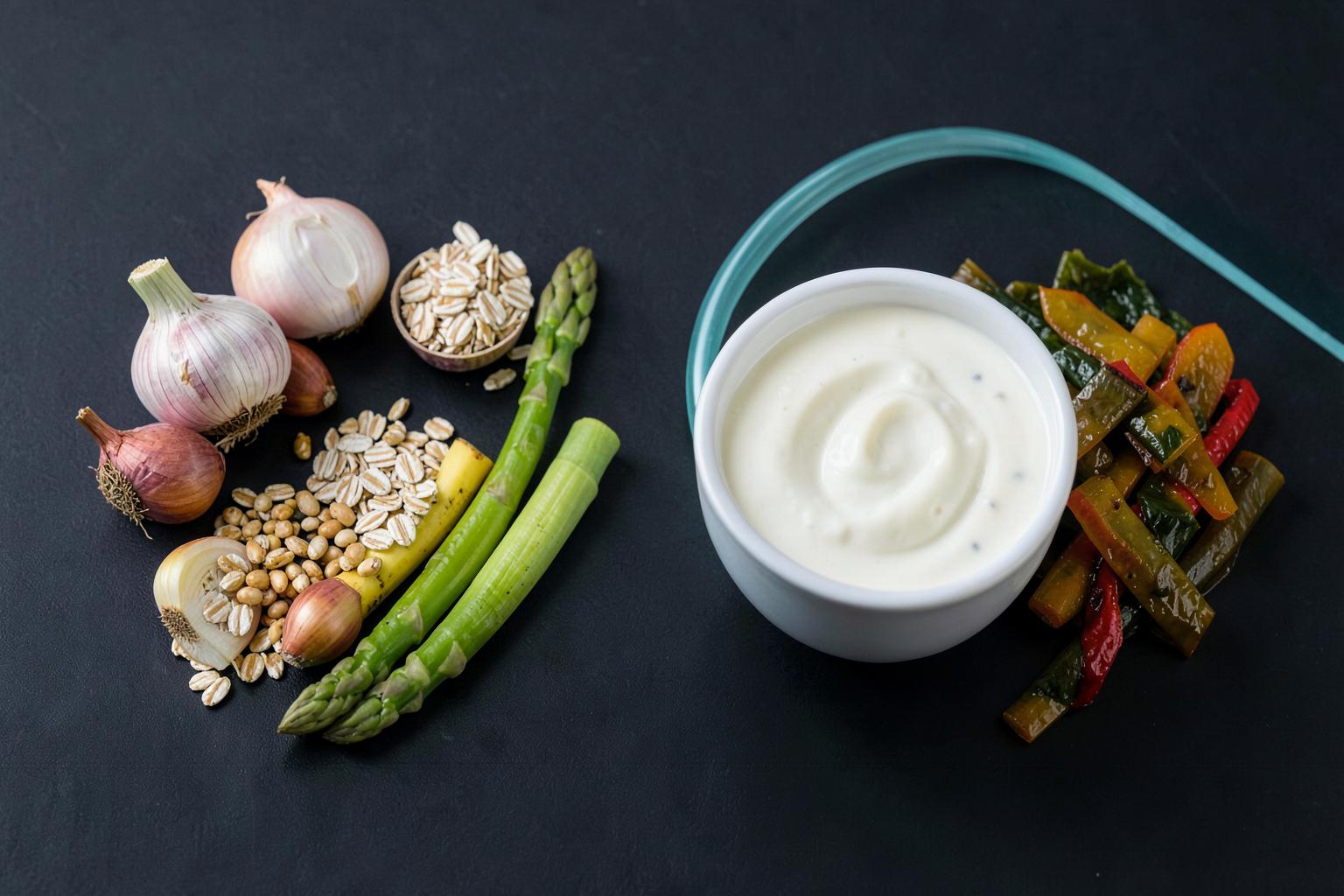
Prebiotics are types of fibre and related compounds that feed beneficial gut microbes. You do not need to buy anything special to get them — they occur naturally in foods such as onions, garlic, oats, legumes, bananas, asparagus and leeks.
A varied diet that includes these foods, where tolerated, gives your microbes a range of material to work with. That said, not every prebiotic-rich food suits everyone. Many prebiotic foods are also high in fermentable carbohydrates (FODMAPs), which can trigger gas and bloating in people with a sensitive gut.
It is also important not to overpromise: prebiotics support normal gut function, but they do not prevent or cure digestive disorders. Think of them as one useful part of an overall pattern, not a treatment.
Probiotics and fermented foods
Probiotics are live microorganisms that, in adequate amounts, may confer a benefit — the key phrase being may, because effects depend on the specific strain, the dose and the health context. Prebiotics feed microbes; probiotics are microbes. The two are often confused but work differently.
Fermented foods such as yoghurt with live cultures, kefir, kimchi, sauerkraut and miso can be enjoyable parts of a varied diet. However, not all fermented foods contain proven probiotic strains, and a food being fermented does not automatically make it a probiotic with a demonstrated benefit.
Probiotic supplements are not necessary or appropriate for everyone, and the evidence for any given product is strain-specific. If you are considering a supplement for a particular symptom, that is a good conversation to have with a doctor or dietitian rather than a social media advert.
Fruits and vegetables for gut health
Fruits and vegetables provide fibre, vitamins, minerals and plant compounds that support general health, and a varied intake is a consistent theme in dietary guidance. Accessible examples include berries, bananas, oranges, carrots, courgettes, spinach, tomatoes, peppers and potatoes — ordinary foods, not exotic ones.
A practical goal is variety across the week rather than perfection at every meal. Different colours and types bring different fibres and nutrients, and frozen or tinned options count too.
Tolerance varies, though. Some fruits and vegetables are high in fermentable carbohydrates and can cause discomfort in susceptible people — apples, pears, onions and cauliflower are common examples. That does not make them unhealthy; it means portion and personal response matter.
Whole grains, legumes, nuts and seeds
Whole grains such as oats, brown rice and whole-grain bread, plus legumes like lentils, beans and chickpeas, and nuts and seeds, all contribute fibre, protein and other nutrients. They are among the most practical healthy gut foods because they are affordable, keep well, and fit into ordinary meals.
Realistic ways to include them: porridge or overnight oats at breakfast, a lentil soup or bean salad at lunch, brown rice or whole-grain pasta at dinner, and a small handful of nuts or seeds as a snack. You do not need all of these every day.
Portion size and pace of change matter, especially if you are prone to bloating. A large bowl of beans after weeks of none is a common recipe for discomfort; a small portion a few times a week, increased gradually, is usually kinder.
Hydration and your diet
Adequate fluid supports normal digestion and bowel function: it helps form digestive juices, keeps material moving through the gut, and gives stool its consistency. When fluid intake is low, stools can become harder and more difficult to pass — especially if you are also increasing fibre.
Fluid needs vary with body size, activity, climate, health conditions and diet, so there is no single target that suits everyone. Many foods, from fruit to soup to yoghurt, also contribute fluid. People with heart or kidney conditions should follow their clinician's advice.
Simple strategies work best: keep a bottle within reach, drink with each meal, and sip regularly rather than gulping a large amount at once. Notice whether carbonated drinks, which add gas, leave you feeling more bloated.
Hydration logging takes a tap, so you can review your daily drinking habits alongside your food records and stool logs — and see whether low-fluid days tend to come before harder stools.
Foods and eating patterns that may trigger symptoms
Some foods and eating patterns are commonly reported as triggers: very large meals, eating quickly, carbonated beverages, fatty meals, certain dairy products in people with lactose intolerance, and foods high in particular fermentable carbohydrates. Caffeine and alcohol can also play a role for some people.
Two cautions matter here. First, these foods do not cause problems for everyone, and they should not automatically be labelled unhealthy — many are nutritious. Second, a single bad experience proves very little; what matters is a recurring pattern across several similar occasions.
That is why eliminating multiple food groups based on assumptions is risky. Broad restriction can reduce fibre, calcium and overall nutrition, increase food anxiety, and still leave the real pattern unfound. Observation first, restriction only with reason — and ideally with professional guidance.
A food and symptom tracker documents what you ate and how you felt, so recurring patterns become visible over weeks rather than being reconstructed from memory after a bad day.
Understanding FODMAPs and individual food tolerance
FODMAPs are fermentable carbohydrates — the name stands for fermentable oligosaccharides, disaccharides, monosaccharides and polyols. They are found in many ordinary foods, from wheat and onions to apples, milk and some sweeteners, and they are not inherently bad.
In some people with irritable bowel syndrome, certain FODMAPs can trigger symptoms such as bloating, pain and altered bowel habits. The low-FODMAP approach was developed for this situation: a short restriction phase, then systematic reintroduction to identify personal triggers, then a personalised long-term diet.
Two things are essential to understand. The approach is not necessary for everyone — most people do not need it. And the restrictive elimination phase should ideally be guided by a qualified dietitian or healthcare professional, because doing it alone risks poor nutrition and wrong conclusions.
How to build a balanced, gut-friendly plate
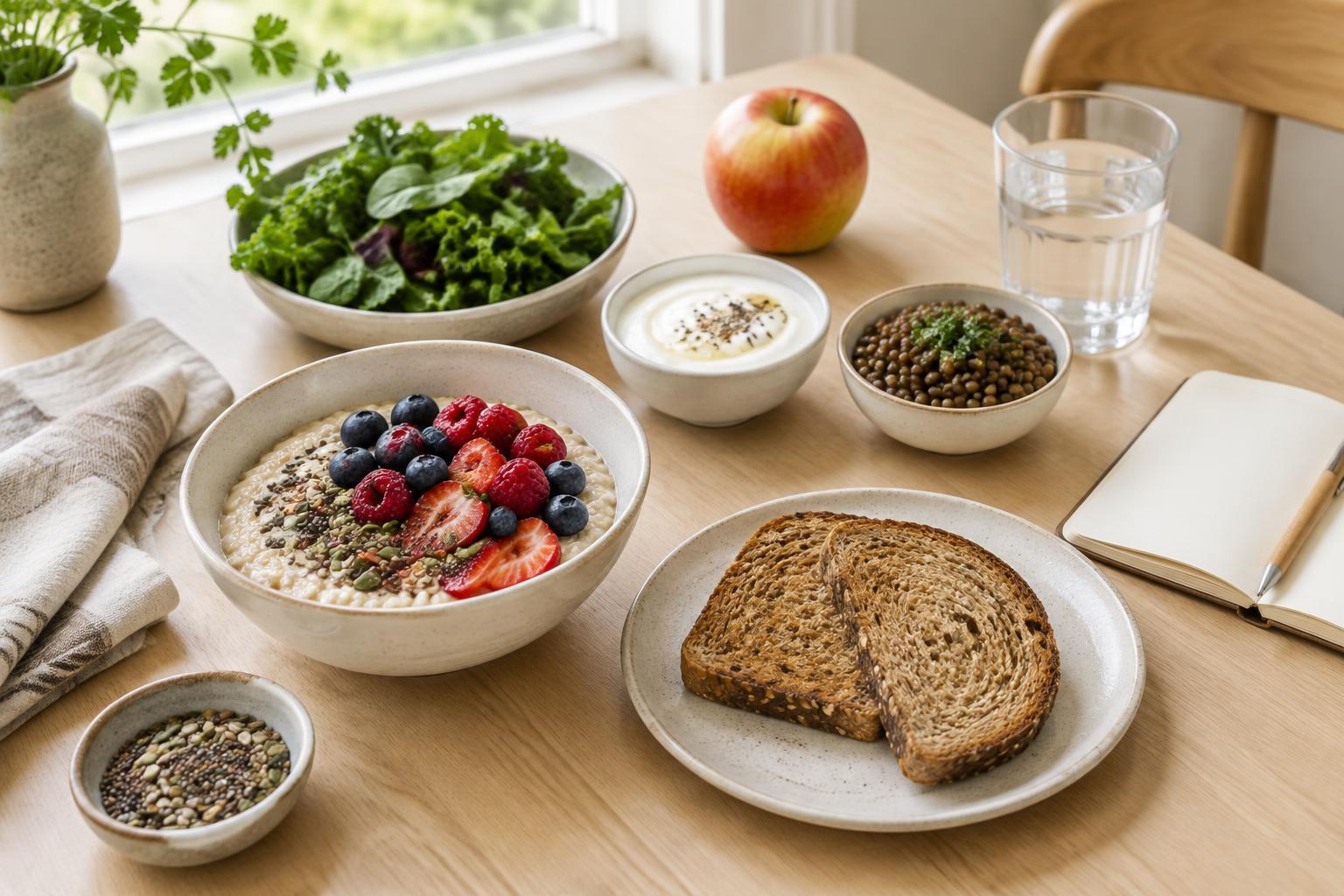
A practical plate usually includes some protein, some starchy carbohydrate (whole grain where tolerated), vegetables or fruit, and a little healthy fat. Add a drink, eat at a comfortable pace, and you have covered the fundamentals without any special products.
Sample ideas using accessible ingredients: breakfast could be porridge with berries and a spoon of nut butter, or eggs with whole-grain toast and tomatoes. Lunch might be a grain bowl with rice, chicken or tofu, roasted vegetables and a simple dressing. Dinner could be baked fish or lentils with potatoes and steamed greens. Snacks might be fruit, yoghurt with live cultures, or a small handful of nuts.
These are flexible examples, not a medical diet or a universal prescription. Swap ingredients to suit your preferences, culture, budget and tolerance — a person who does not tolerate cows' milk, for instance, might choose lactose-free or fortified alternatives.
How stress, sleep and lifestyle affect your relationship with food
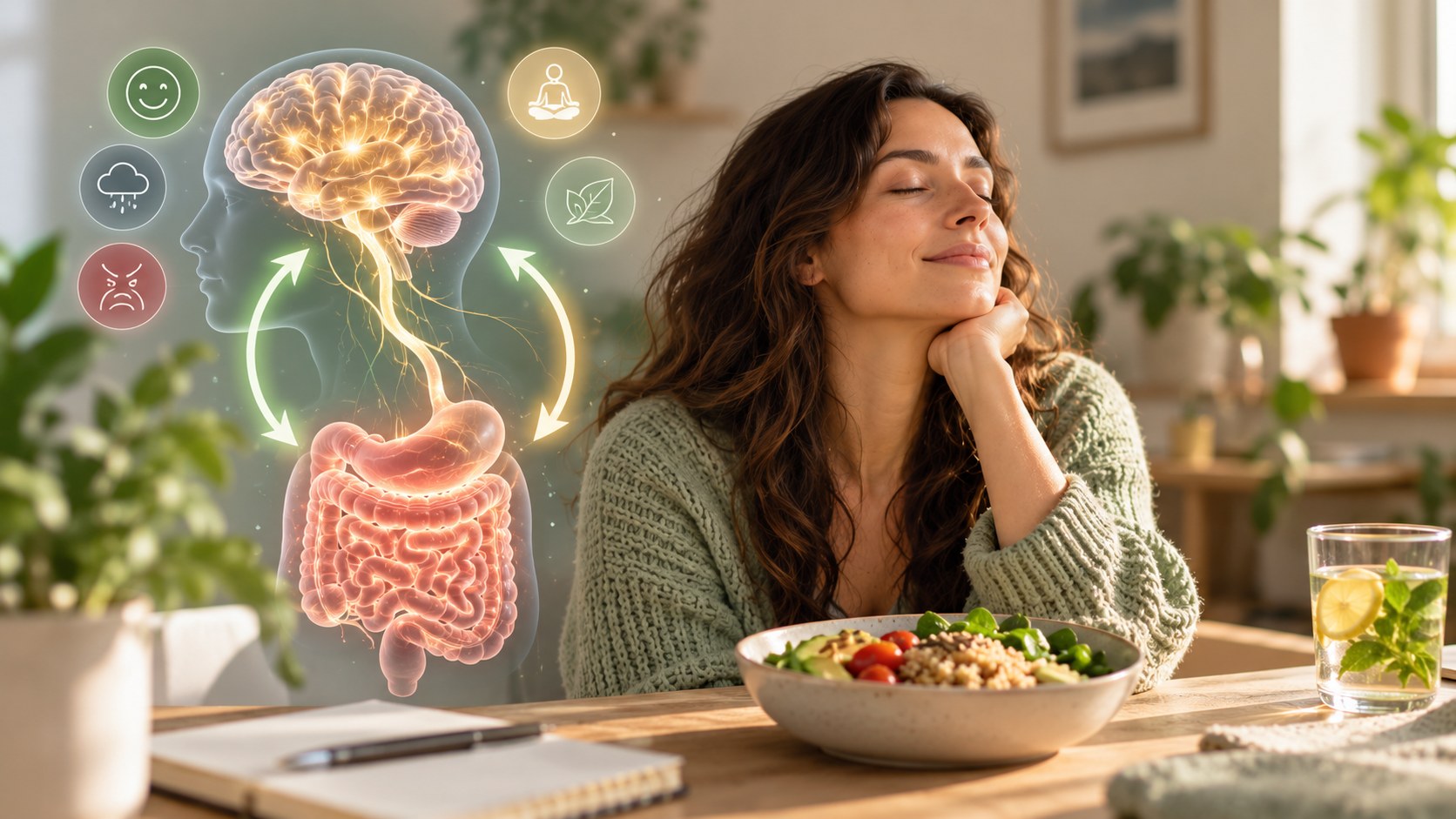
Digestive health is influenced by more than food alone. The gut and brain are in constant communication — the gut–brain axis — which is why a stressful week can change how the same lunch feels. Poor sleep, rushed eating, low activity and irregular routines can all play a part too.
This matters for two reasons. It explains why changing diet alone may not resolve every digestive symptom, and it means a symptom after a meal is not automatically that meal's fault — the stressful day, the short night and the skipped breakfast are also candidates.
None of this means symptoms are imaginary or merely psychological. It means the gut responds to the whole of your life, so the whole picture is worth observing.
Gut Pace lets you record symptoms alongside hydration, sleep, stress and daily habits in one timeline, so you can see whether difficult days line up with poor sleep or stressful weeks rather than only with particular foods.
The gut–brain connection: why digestion responds to emotions
How a gut health app helps you understand your diet
Memory is a poor instrument for pattern-spotting. We remember the most recent bad day and the most dramatic meal, and quietly forget the ordinary weeks in between. A gut health journal kept consistently — even briefly each day — replaces that unreliable recall with organised records you can actually review.
A digestive health app makes that record-keeping practical: recording meals and snacks, tracking digestive symptoms as they happen, logging hydration, reviewing stool or bowel habit records, noting sleep and relevant lifestyle habits, and then reviewing everything together to identify recurring associations.
For people with IBS, an IBS symptom tracker can help document experiences over time — but tracking does not confirm an IBS diagnosis, and no app can make one. What organised records do is turn I think this food bothers me into here is what I observed over six weeks, which is exactly the kind of information that makes a healthcare appointment more useful.
Gut Pace is built as this kind of supportive tracking and awareness tool. The AI food scanner and voice logging keep meal records quick; symptom, stool, hydration, sleep and stress logs sit on the same timeline; and the AI coach can help you review your own logged patterns. It does not analyse laboratory tests, measure gut bacteria, automatically detect food intolerance, diagnose IBS or prescribe treatment.
A sample one-day gut-friendly eating plan
To make the principles concrete, here is one illustrative day. It is educational, not a universal diet prescription — adjust portions, ingredients and timing to your own needs and tolerance.
Breakfast: porridge made with oats, topped with banana slices and a spoon of peanut butter, plus a glass of water. Mid-morning: a yoghurt with live cultures, if you tolerate dairy. Lunch: a bowl with brown rice, roasted vegetables, chickpeas and a simple olive-oil dressing. Afternoon snack: a small handful of nuts and an easy-to-tolerate fruit. Dinner: baked salmon or lentil dal with potatoes and steamed green beans, eaten early enough that you are not going to bed very full. Water spread through the day.
Alternatives keep it flexible: lactose-free yoghurt if dairy bothers you, quinoa instead of rice, tofu instead of fish, tinned lentils instead of dried. No single day of eating will eliminate bloating or cure digestive symptoms — the value is in a pattern you can repeat and observe.
Common gut-healthy diet mistakes
Most gut-diet mistakes come from the same place: wanting a fast, simple answer to a slow, individual question. These are the ones worth avoiding.
- Assuming expensive superfoods are necessary — ordinary oats, beans, fruit and vegetables do the heavy lifting.
- Increasing fibre too quickly, then blaming fibre for the resulting gas and bloating.
- Eliminating entire food groups without guidance, risking poor nutrition and food fear.
- Believing all fermented foods are proven probiotics.
- Buying supplements based on social media claims rather than evidence or professional advice.
- Expecting immediate results — gut patterns usually shift over weeks, not days.
- Ignoring sleep, stress and hydration while focusing only on food.
- Assuming every digestive symptom is caused by something you ate.
- Using symptom-tracking records as a substitute for diagnosis.
When to seek professional advice
Self-observation has limits, and persistent digestive symptoms may need medical assessment. Speak to a doctor if symptoms are severe, keep returning, are new and unexplained, or are affecting eating, sleep, work or daily life.
Some warning signs need prompt or urgent assessment rather than watchful waiting: blood in the stool, black tarry stools, unexplained weight loss, persistent vomiting, severe or worsening abdominal pain, difficulty swallowing, persistent fever, or a lasting change in bowel habits. Sudden severe pain, significant bleeding or fainting may need urgent care.
A gut health app cannot replace a qualified healthcare professional. What it can do is help you arrive at that appointment with a clear, organised summary of your meals, symptoms and patterns — which often makes the conversation shorter and more useful.
- Note when symptoms started and how often they occur.
- Record changes in stool form, frequency, urgency, pain and bloating.
- List medicines, supplements, recent infections and family history.
- Mention weight loss, bleeding, fever or night symptoms clearly.
- Bring a concise food-and-symptom pattern if you have one — without delaying the appointment to collect more data.
Conclusion: find an approach that works for your gut
A gut-healthy diet is not a perfect diet. It is a varied one, built from ordinary foods you enjoy and tolerate, with suitable fibre introduced gradually, enough fluid, and eating patterns that fit your real life. You do not need to eliminate every food you have ever suspected, and you do not need expensive products to eat well for your gut.
What helps most is honest observation: noticing what you eat, how you feel, how you sleep and how stressed you are, over long enough for real patterns to emerge. That is the gap Gut Pace is designed to fill — a practical way to record meals, symptoms, hydration, sleep and daily habits so your digestive experiences become a picture you can see, question and, when needed, share with a professional.
Start small, stay curious, and let your own patterns guide you. Better gut. Better you.
At a glance
Key takeaways
- A gut-healthy diet means variety, suitable fibre, hydration and foods that suit your tolerance — not one rigid plan.
- Increase fibre gradually and pair it with enough fluid to stay comfortable.
- Prebiotics feed gut microbes; probiotics are live microbes — neither is a cure, and tolerance varies.
- Sleep, stress, eating pace and routine shape digestion alongside food.
- Tracking meals, symptoms and habits reveals personal patterns — but it never replaces medical diagnosis.
Frequently asked questions
What is a gut-healthy diet?
A gut-healthy diet is a varied, balanced way of eating that includes a range of plant foods, suitable fibre, adequate fluid and foods that match your individual tolerance. It is not a single rigid meal plan, and it looks different from person to person.
What are the best foods for gut health?
There is no single best food. Variety matters most: fruits and vegetables, whole grains such as oats and brown rice, legumes, nuts, seeds and fermented foods like yoghurt with live cultures where tolerated. Ordinary, affordable foods cover the fundamentals.
Is fibre important for digestion?
Yes. Soluble and insoluble fibre support bowel regularity and feed gut microbes. Increase it gradually and drink enough fluid, because a sudden jump in fibre can cause gas and bloating while your gut adjusts.
What is the difference between prebiotics and probiotics?
Prebiotics are fibres and compounds that feed beneficial gut microbes — found in foods like oats, onions, garlic and legumes. Probiotics are live microorganisms that may confer a benefit depending on the strain, dose and context. Not all fermented foods contain proven probiotic strains.
Can certain foods cause bloating?
Yes, for some people. Large meals, eating quickly, carbonated drinks, fatty meals, certain dairy products in people with lactose intolerance, and foods high in fermentable carbohydrates are common triggers. These foods are not unhealthy for everyone — recurring personal patterns matter more than general lists.
Is a low-FODMAP diet suitable for everyone?
No. It was developed for some people with IBS and involves a short restriction phase followed by structured reintroduction. It is not necessary for most people, and the restrictive phase should ideally be guided by a qualified dietitian.
How can I track foods that trigger symptoms?
Keep a consistent food and symptom record for several weeks: what you ate, roughly how much, when, and what you felt afterwards. Look for patterns that repeat across several occasions rather than single bad days, and bring a summary to a professional if symptoms persist.
What is a gut health app?
A gut health app is a tool for recording meals, digestive symptoms, hydration, sleep and related habits in one place, so you can review your own patterns over time. It supports awareness and organisation; it does not diagnose or treat conditions.
How can an IBS symptom tracker help?
An IBS symptom tracker helps you document symptoms, meals and lifestyle factors consistently, making recurring associations easier to see and giving you organised information for healthcare appointments. Tracking does not confirm an IBS diagnosis.
Can Gut Pace diagnose digestive conditions?
No. Gut Pace is a tracking and awareness tool. It does not diagnose IBS or any other condition, measure gut bacteria, analyse laboratory tests or automatically detect food intolerance. Persistent or concerning symptoms should always be assessed by a qualified healthcare professional.
Editorial information
Reviewed by the Gut Pace Editorial Team as general nutrition and wellbeing information, not medical or dietary prescription.
Last reviewed: Oct 16, 2026
Sources & further reading
- NHS — Good foods to help your digestion
- NHS — How to get more fibre into your diet
- NIDDK — Eating, diet and nutrition for IBS
- NIDDK — Your digestive system and how it works
This article is for general information only and is not medical advice. It does not diagnose or treat any condition. Speak with a doctor or registered dietitian about persistent, severe or concerning symptoms.