

In this article
Prebiotics vs probiotics at a glance
| Prebiotics | Probiotics | |
|---|---|---|
| What they are | Substrates used by host microorganisms | Live microorganisms |
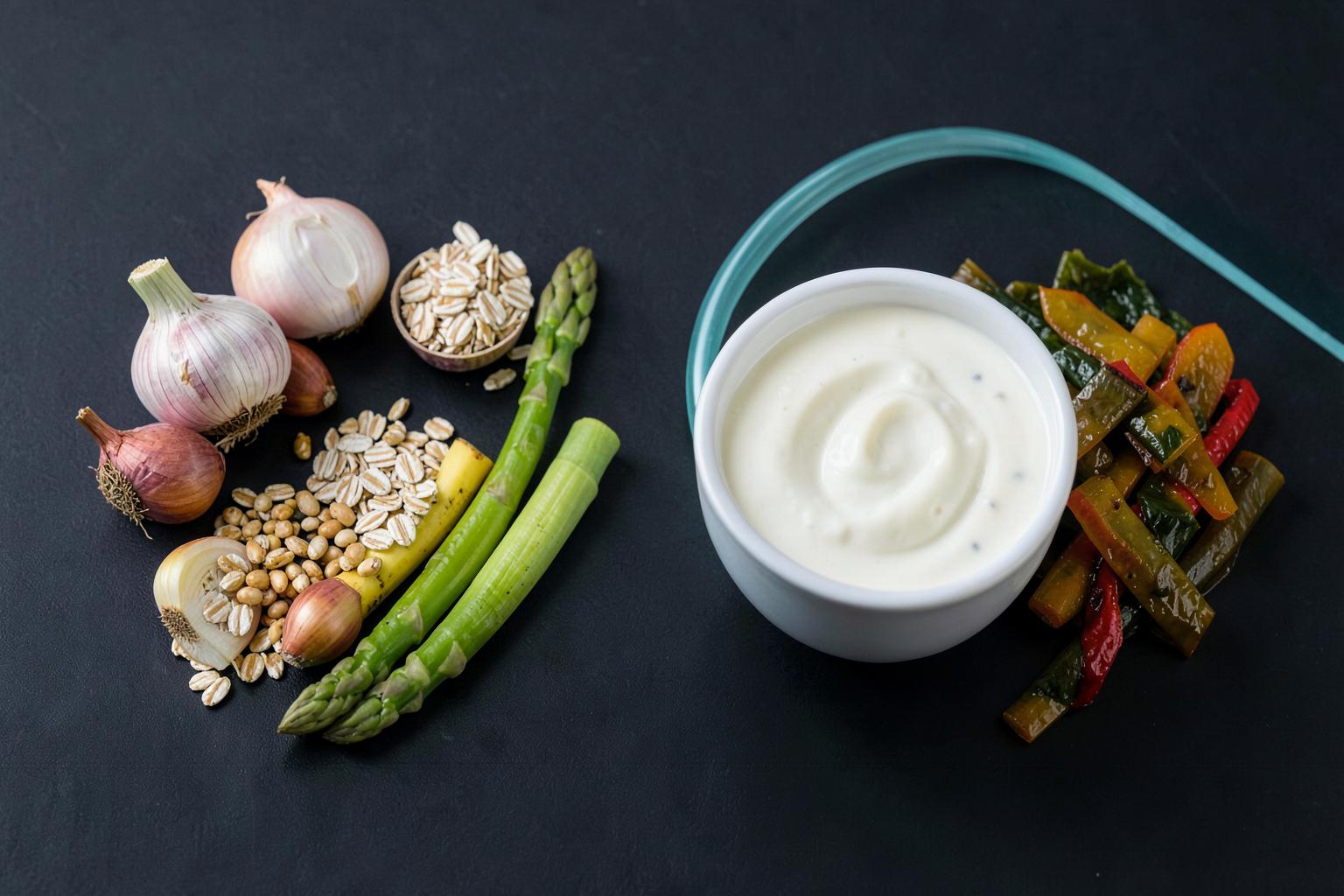
| Common sources | Onion, garlic, oats, legumes, some bananas | Some yoghurts, kefir and fermented products |
| Key detail | Type and dose affect fermentation | Benefit is strain- and condition-specific |
| Main limitation | May increase gas in sensitive people | Not every product has clinical evidence |
Where prebiotics occur in everyday food
Many foods called prebiotic contain fibres or compounds fermented by gut microbes. Garlic, onion, legumes and some grains are common examples, but they can also be high in FODMAPs.
A food can be nutritious and still need a smaller portion for someone with IBS. Tolerance matters more than forcing a fashionable ingredient.
- Oats and barley
- Onion, garlic and leeks
- Beans, lentils and chickpeas
- Asparagus and some slightly underripe bananas
- Cooked-and-cooled starches
Why probiotic evidence is strain-specific
Probiotic is not one ingredient. Research may support a named strain at a particular dose for a defined use; that result cannot automatically be applied to another organism or blend.
Food products can contribute to a varied diet, but labels such as live cultures do not prove treatment of a digestive condition.
Food first or a supplement?
| Question | Food approach | Supplement approach |
|---|---|---|
| Variety | Adds nutrients and fibre | Usually narrow and strain-specific |
| Dose | Can be less precise | Can list a defined amount |
| Cost | Part of normal meals | Ongoing extra cost |
| Best use | General dietary pattern | A specific evidence-based trial |
How to run a sensible personal trial
A personal trial only tells you something if you remember what changed and when. Gut Pace lets you note the day you started a fermented food or supplement and log symptoms and stool type around it, so after a few weeks you can look back at a dated record instead of a vague impression. That record shows associations, not proof that a product worked — but it is useful to bring to a pharmacist or dietitian.
- 1
Define the reason
Choose one symptom or outcome rather than general detox language.
- 2
Check the evidence
Match the strain and dose to that specific purpose.
- 3
Change one thing
Keep other foods and routines broadly stable.
- 4
Set a review date
Stop if it causes harm or offers no meaningful benefit.
A healthier microbiome is not one universal profile
Researchers have not defined one perfect microbiome shared by everyone. Diet, age, environment, medicines and health conditions all influence microbial communities.
Use prebiotic and probiotic claims as specific questions, not promises to reset the gut.
Read the plain-English guide to gut health and the microbiome
At a glance
Key takeaways
- Prebiotics feed microorganisms; probiotics are live microorganisms.
- Probiotic benefits depend on the exact strain and purpose.
- Prebiotic foods can produce symptoms at larger portions.
- A varied tolerated diet matters more than a single product.
- Supplements should have a defined reason and review date.
Frequently asked questions
Which is better, prebiotics or probiotics?
They do different jobs, so there is no universal winner. The useful choice depends on your diet, symptoms and goal.
Can I take prebiotics and probiotics together?
Some people do, but combining products makes effects harder to interpret and can increase symptoms. Introduce one change at a time.
Is yoghurt a probiotic?
Some yoghurts contain live cultures, but a probiotic benefit depends on the organisms, dose and evidence for a specific outcome.
Can prebiotics make bloating worse?
Yes. Fermentation can increase gas, particularly with a rapid increase or in a sensitive gut.
How long should I try a probiotic?
Follow evidence or professional advice for that product and set a review date rather than taking it indefinitely without a clear benefit.
Do fermented foods contain probiotics?
Some contain live microbes when consumed, but not every fermented food meets the scientific definition of a probiotic.
Are probiotics safe for everyone?
They are not appropriate without advice for some seriously ill or immunocompromised people. Ask a clinician if you are unsure.
Editorial information
Reviewed by the Gut Pace Editorial Team for evidence-informed wording, practical clarity and appropriate medical-safety guidance.
Last reviewed: Sep 12, 2026
Sources & further reading
- NCCIH — Probiotics: usefulness and safety
- ISAPP — Prebiotic and probiotic science
- NIDDK — Your digestive system and how it works
This article is for general information only and is not medical advice. It does not diagnose or treat any condition. Speak with a doctor or registered dietitian about persistent, severe or concerning symptoms.