
In this article
What fluid does during digestion
Digestive secretions help break food down, while the colon reabsorbs water before stool passes. Fluid intake is one part of this balance.
When intake is low, stool may become harder for some people. The effect is most relevant when paired with fibre, movement, medicines and the underlying cause.
| Role | Why it matters | What it does not prove |
|---|---|---|
| Supports body fluids | Enables normal physiological functions | That more is always better |
| Works with fibre | Gel-forming fibre needs fluid | That water alone treats constipation |
| Replaces losses | Important during heat, exercise or diarrhoea | That plain water replaces all severe losses |
| Supports routine | Steady drinks may prevent long gaps | A fixed target for everyone |
Why hydration needs vary
- Body size and diet
- Climate, exercise and sweating
- Pregnancy or breastfeeding
- Fever, vomiting or diarrhoea
- Heart, kidney or fluid-balance conditions
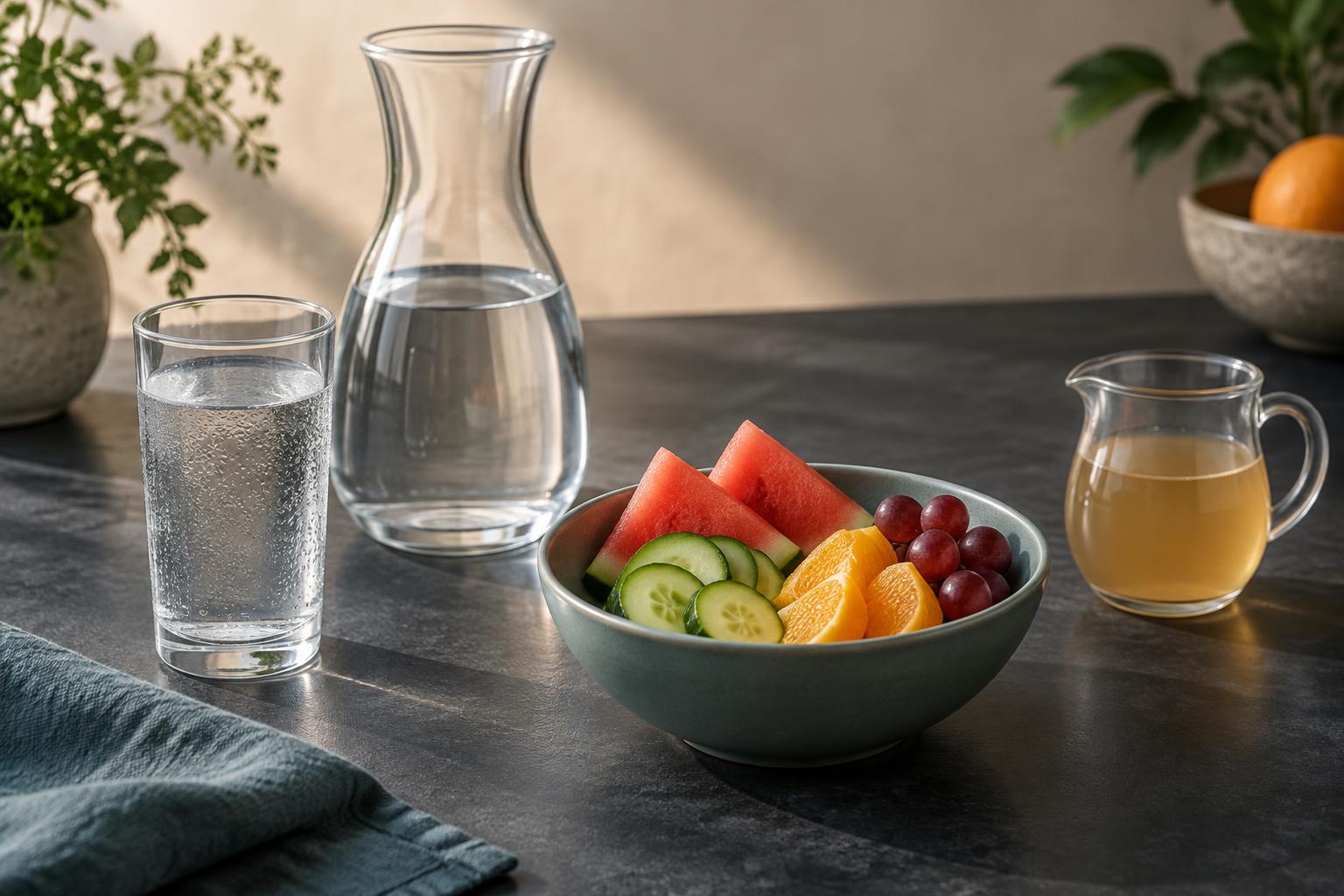
- Drinks and water-rich foods across the day
Build a steady hydration routine
- 1
Start with your normal day
Notice long gaps and whether thirst is regularly ignored.
- 2
Spread drinks
Use meals and routine cues rather than catching up late at night.
- 3
Match fibre changes
Keep fluids appropriate as whole grains or seeds increase.
- 4
Adapt to losses
Heat, exercise or illness may change needs.
- 5
Follow medical limits
Individual clinical advice takes priority over general targets.
Water, caffeine, alcohol and fizzy drinks
| Drink | Useful context | Possible digestive issue |
|---|---|---|
| Water | Simple fluid source | Large rapid amounts may feel uncomfortable |
| Coffee or tea | Contributes fluid | Caffeine may affect reflux or urgency |
| Alcohol | Can disrupt sleep and symptoms | Not a hydration strategy |
| Fizzy drinks | Count as fluid | Carbonation can increase fullness |
| Oral rehydration solution | Designed for some fluid losses | Use correctly; not a daily wellness drink |
How to track hydration without chasing a perfect number
Record broad drink patterns, fibre changes, stool form, activity and weather. Urine colour can offer context, but medicines and foods can affect it.
Focus on repeated relationships and avoid forcing excessive fluid to improve an app score.
Hydration logging in Gut Pace is deliberately quick, so a missed glass doesn't turn into a chore. Seen alongside your stool entries and meals, your own drinking pattern becomes visible over a few weeks — for example, whether harder stools tend to follow busy, low-fluid days. It is one part of the picture, not a target to chase.
When dehydration or digestive symptoms need care
People with heart, kidney or fluid-balance conditions should follow their clinician’s personalised advice rather than increasing fluid independently.
At a glance
Key takeaways
- Fluid supports normal digestion but is not a cure-all.
- Needs vary with diet, climate, activity and health.
- Steady intake is easier to interpret than large catch-up amounts.
- Fibre and fluids should be considered together.
- Severe fluid loss needs appropriate medical care.
Frequently asked questions
Does drinking water help digestion?
It supports normal digestive function and may help stool consistency when intake is low, but it does not treat every symptom.
Can dehydration cause constipation?
Low intake can contribute to harder stool in some people, though constipation often has several causes.
How much water should I drink?
There is no single target for everyone. Needs vary with diet, activity, climate, health and other drinks.
Does coffee count toward hydration?
Coffee contributes fluid, but caffeine may affect urgency, reflux or sleep for some people.
Can too much water be harmful?
Yes. Excessive intake can disturb sodium balance, so more is not always better.
Should I drink more when increasing fibre?
Keep fluid appropriate and steady as fibre rises, unless a clinician has given you a restriction.
What are urgent dehydration signs?
Confusion, faintness, very low urine, rapid deterioration or inability to keep fluids down require prompt care.
Editorial information
Reviewed by the Gut Pace Editorial Team for evidence-informed wording, practical clarity and appropriate medical-safety guidance.
Last reviewed: Sep 12, 2026
Sources & further reading
This article is for general information only and is not medical advice. It does not diagnose or treat any condition. Speak with a doctor or registered dietitian about persistent, severe or concerning symptoms.