
In this article
- Why food and IBS feel so closely connected
- What does a food trigger actually mean?
- Common foods people with IBS may question
- FODMAPs explained in simple language
- Why food tracking alone is not enough
- How to keep an IBS food and symptom journal
- Look for patterns, not one-off reactions
- How Gut Pace can help
- When to speak with a healthcare professional
- Your patterns matter more than someone else’s list
Why food and IBS feel so closely connected
If you live with IBS, you have probably asked yourself after a difficult day: what did I eat? It is a natural question. Symptoms often appear during or after meals, and many people with IBS say eating affects how they feel. The internet is full of lists of ‘foods to avoid’, which can make it seem as if the answer is simply to cut out the right things.
In reality, the relationship between IBS and food is more personal and more complex. Eating itself stimulates the gut, so some symptoms after meals may relate to how the bowel responds to eating in general rather than to a specific ingredient. Food can matter — but so do portion size, timing, the whole meal, and what else is happening in your life that day.
This guide is designed to help you think clearly about IBS food triggers: what the term really means, which foods people commonly question, and how to gather your own information without restricting your diet unnecessarily. It is educational, not diagnostic, and it is best used alongside advice from a qualified healthcare professional.
What does a food trigger actually mean?
The word ‘trigger’ is used loosely. It can help to separate four quite different situations:
Most people start in the first row. The goal of careful tracking is to find out, over time, whether a suspicion moves into the second row, turns out to be coincidence, or points to a broader eating pattern.
| Situation | What it looks like | What it may mean |
|---|---|---|
| A suspected food | You felt unwell after eating it once or twice and now avoid it | A starting point for observation — not yet evidence |
| A consistently associated food | Similar symptoms appear repeatedly after a similar portion, across different days | A more meaningful pattern worth discussing with a professional |
| A coincidence | Symptoms appeared after a food but also on days you did not eat it | Something else — stress, sleep, a virus — may be involved |
| A meal or eating-pattern effect | Symptoms follow large, rushed or late meals regardless of what is in them | How and when you eat may matter more than a single ingredient |
Common foods people with IBS may question
The categories below are often mentioned by people with IBS. They are not ‘bad’ foods, and most people with IBS do not need to avoid all of them. Portion size and individual sensitivity make a big difference.
| Food category | Examples | Why some people question it |
|---|---|---|
| High-FODMAP foods | Onion, garlic, wheat, beans, apples, some dairy | Contain fermentable carbohydrates that some sensitive guts react to |
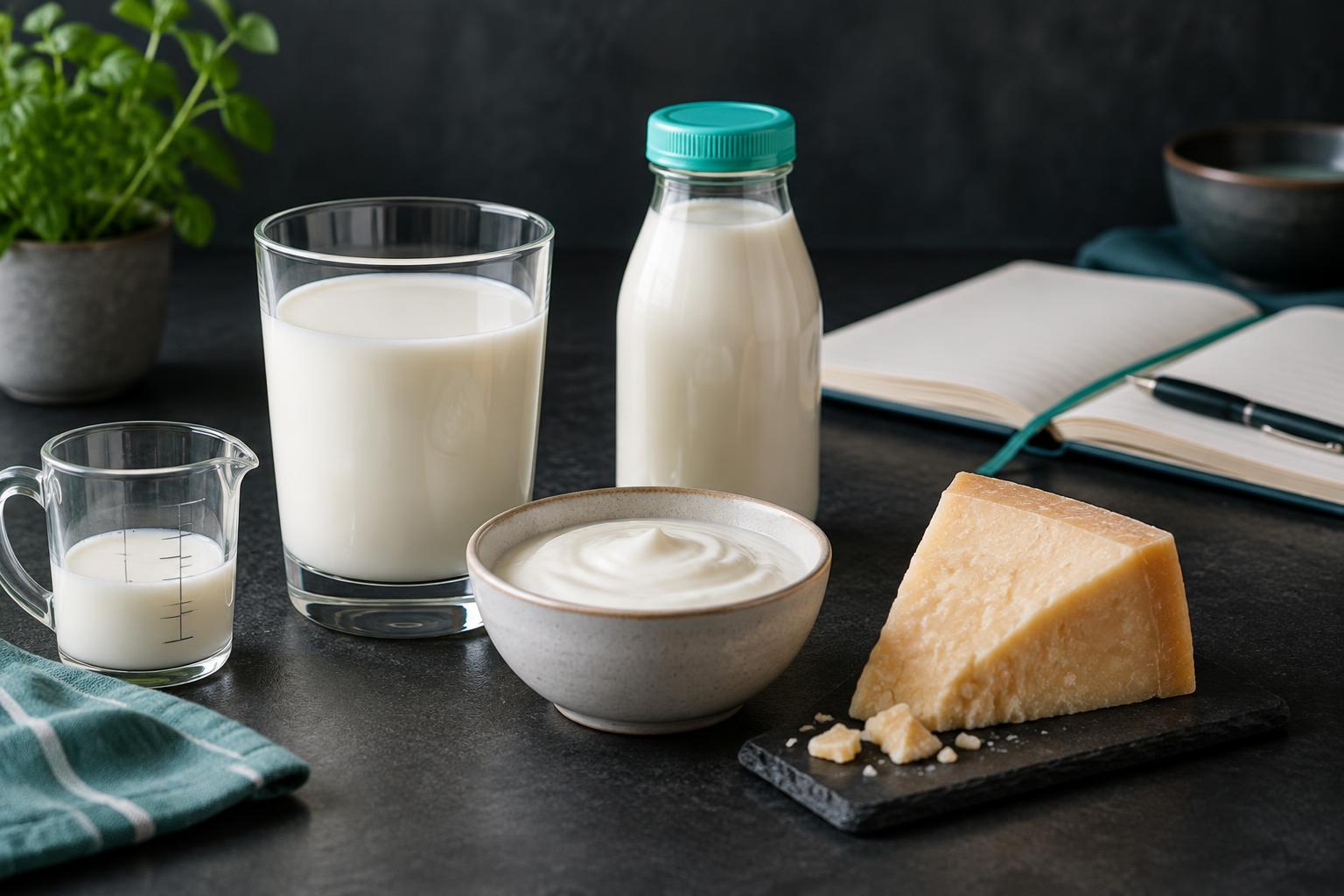
| Dairy | Milk, soft cheese, ice cream | Lactose may be poorly absorbed by some people; hard cheeses are usually lower in lactose |
| Very fatty or greasy meals | Fried foods, rich takeaways, creamy sauces | Fat stimulates gut contractions, which some people notice more |
| Spicy foods | Chilli, hot sauces | Capsaicin may heighten gut sensitivity in some people |
| Certain sweeteners | Sorbitol, mannitol, xylitol in sugar-free products | Sugar alcohols are poorly absorbed and may draw water into the bowel |
| Large meals | Big portions, eating late | Volume alone can increase fullness, pressure and bowel activity |
| Carbonated drinks | Fizzy water, soft drinks, beer | Add gas that may contribute to bloating or discomfort |
| Caffeine | Coffee, energy drinks, strong tea | Can stimulate bowel movements, which some welcome and others find unsettling |
FODMAPs explained in simple language
FODMAP stands for Fermentable Oligosaccharides, Disaccharides, Monosaccharides And Polyols. In plain English, these are types of carbohydrate that are not fully absorbed in the small intestine. They draw water into the bowel and are fermented by gut bacteria, producing gas.
This happens in everyone. But in some people with IBS, whose gut may be more sensitive to stretching and gas, this process may be associated with bloating, pain or changes in bowel habits. That is why the link between FODMAPs and IBS has been widely studied.
A low-FODMAP approach is a structured, temporary process — not a permanent diet. It usually involves a short period of reducing high-FODMAP foods, then carefully reintroducing them one group at a time to learn which ones, and what amounts, you personally tolerate. The final stage is a personalised, as-varied-as-possible diet. Because the process can be restrictive and easy to get wrong, it is best done with guidance from a registered dietitian rather than by removing large food groups indefinitely.
Why food tracking alone is not enough
If you only record food, every symptom will seem to point at a meal. Yet many other factors may be associated with how your gut feels, and leaving them out can lead to the wrong conclusions.
- Stress — busy or anxious periods may coincide with more pain or changes in bowel habits
- Sleep — short or disrupted sleep is often followed by more sensitive days
- Hydration — low fluid intake may be linked to harder stools
- Exercise — regular gentle movement may support bowel regularity for some people
- Meal size — the same food may feel different in a small or large portion
- Eating speed — eating quickly can mean swallowing more air
- Menstrual cycle — many people notice symptoms change at certain points in their cycle
- Changes in routine — travel, shift work, holidays and illness
How to keep an IBS food and symptom journal
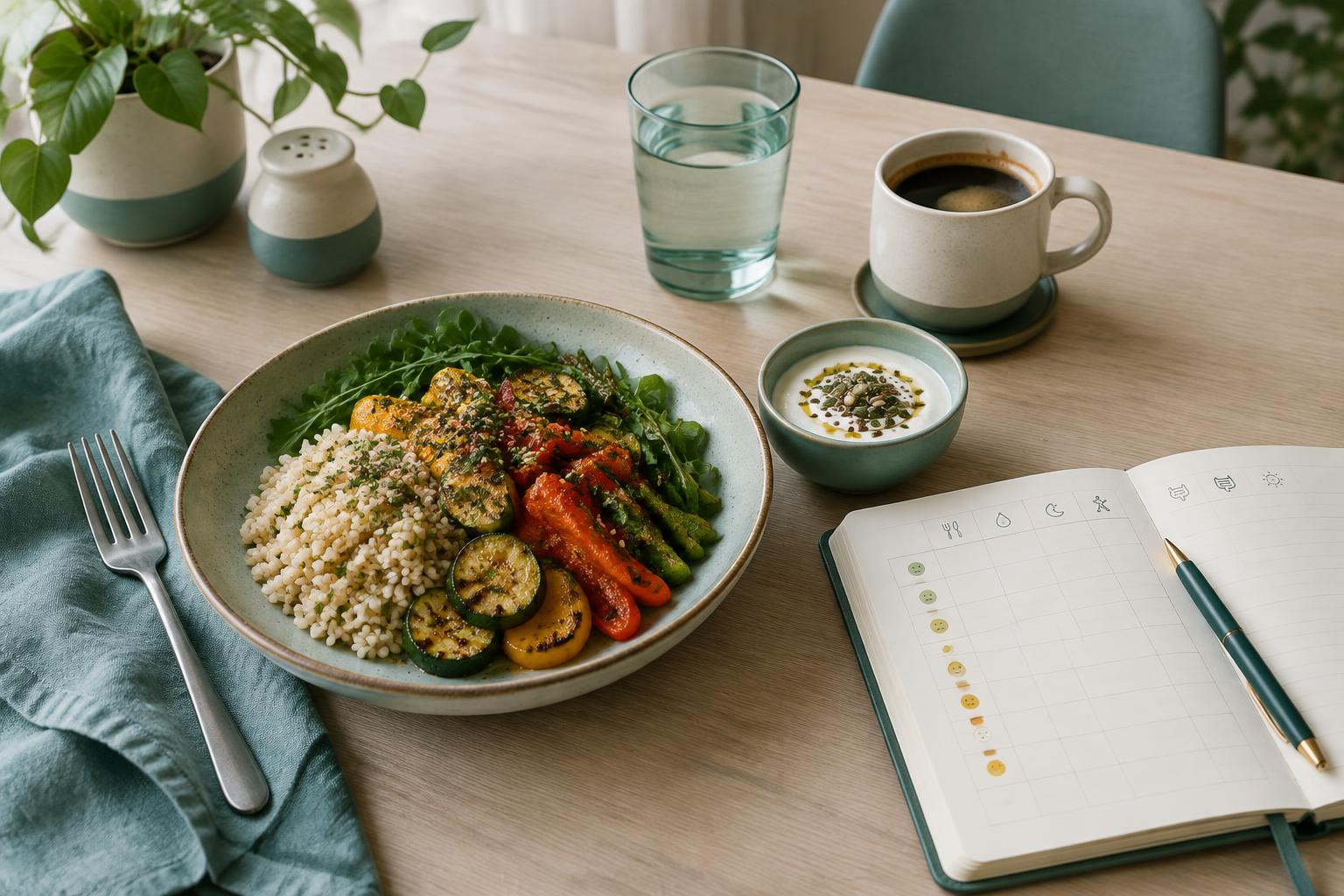
An IBS food diary works best when it is simple enough to keep up every day. Here is a practical approach:
- Date and time
- Meal and approximate portion
- Symptoms and symptom intensity
- Bowel movement and stool type
- Hydration
- Sleep
- Stress or mood
- Other relevant daily factors
- 1
Choose a timeframe
Commit to around two to four weeks of consistent notes. Keep eating your usual diet at first so you have an honest baseline.
- 2
Log meals when you eat them
Record the date, time, what you ate and drank, and an approximate portion. A photo can save time and jog your memory later.
- 3
Record symptoms with intensity
Note pain, bloating, urgency or other symptoms, when they started, and a simple 0–10 rating.
- 4
Note bowel movements
Record timing and stool type — the Bristol Stool Form Scale gives a consistent description.
- 5
Add the daily context
Include fluids, sleep, stress or mood, activity, menstrual cycle if relevant, and any medicines or supplements.
- 6
Review weekly, not hourly
Once a week, look back for repeated patterns. Avoid drawing conclusions from any single meal or day.
Look for patterns, not one-off reactions
One uncomfortable evening after pizza does not prove that cheese, wheat or tomato is a trigger. Symptoms can have a delay of several hours — sometimes longer — and they may reflect the whole day rather than the last meal. You may also have slept badly, been stressed or eaten a larger portion than usual.
A more meaningful sign is repetition: similar symptoms appearing after a similar food and portion on several different occasions, while being less common on days without it. Even then, the portion often matters — many people find they can enjoy a smaller amount of a food comfortably.
Looking for patterns also helps you notice good news. You may discover foods you had been avoiding are actually fine, allowing you to bring variety back into your diet.
How Gut Pace can help
Gut Pace is an AI-powered IBS and gut health tracking app designed to make this kind of record easier to keep. You can log meals by photo, voice or preset, and record symptoms, bowel movements, hydration, sleep and mood in one place. Optional wearable connections can add sleep and activity context automatically.
The AI helps you organise and review what you have logged — for example, surfacing possible patterns between meals, symptoms and daily habits over time. It does not diagnose IBS, confirm food intolerances or replace a doctor or dietitian. Instead, it gives you a clearer, more complete picture to reflect on and to share with a healthcare professional if you choose.
When to speak with a healthcare professional
A food and symptom journal is a helpful tool, but it is not a substitute for medical assessment. If you have not been diagnosed with IBS, or if your symptoms are persistent, severe, unusual or changing, speak with a qualified healthcare professional. Some conditions, such as coeliac disease, should be tested for before you remove gluten or other foods, because cutting them out first can affect test results.
A registered dietitian can also help you work through a structured approach such as low FODMAP safely, making sure your diet remains nutritionally balanced.
Your patterns matter more than someone else’s list
Social media is full of confident advice about what people with IBS should never eat. But IBS food triggers are individual, and a list that works for one person may be irrelevant — or unnecessarily restrictive — for you.
Understanding your own digestive patterns, gathered patiently and reviewed with care, is often far more useful than following random food rules. With a clear record and support from a qualified professional, you can make calmer, better-informed choices about what you eat. Better gut. Better you.
At a glance
Key takeaways
- IBS food triggers are personal; there is no single IBS diet for everyone.
- A suspected food is not the same as a consistent, repeated pattern.
- Commonly questioned foods are not ‘bad’ — portion and individual sensitivity matter.
- Low FODMAP is a structured, temporary process best done with a dietitian.
- Track sleep, stress, hydration and routine alongside food.
- Look for repeated patterns over weeks rather than one-off reactions.
Frequently asked questions
What are the most common IBS food triggers?
Foods people with IBS often question include high-FODMAP foods, dairy, fatty meals, spicy food, sugar-free sweeteners, large meals, fizzy drinks and caffeine. However, triggers vary widely and many people tolerate some or all of these.
Is there a best diet for IBS?
There is no single IBS diet that works for everyone. Some people benefit from regular meals and simple adjustments, while others work with a dietitian on a structured approach such as low FODMAP.
How long does it take to identify a food trigger?
It usually takes several weeks of consistent tracking to see repeated patterns. Structured reintroduction, often guided by a dietitian, gives clearer answers than observation alone.
Should I cut out gluten or dairy if I have IBS?
Not without advice. Removing foods broadly may be unnecessary, and cutting out gluten before coeliac testing can affect results. Speak with a doctor or registered dietitian first.
Why do I react to a food one day but not another?
Portion size, the rest of the meal, stress, sleep, hydration and hormonal changes can all influence symptoms, so the same food may feel different on different days.
Can Gut Pace tell me which foods I am intolerant to?
No. Gut Pace helps you organise your food, symptom and lifestyle logs and review possible patterns. It does not diagnose IBS or confirm food intolerances — that requires a healthcare professional.
What should I record in an IBS food diary?
Record the date and time, meal and portion, symptoms and their intensity, bowel movements, hydration, sleep, stress or mood, and other relevant daily factors.
Editorial information
Reviewed by the Gut Pace Editorial Team for evidence-informed wording, practical clarity and appropriate medical-safety guidance. Gut Pace is a tracking tool; it does not diagnose, treat, cure or prevent IBS or any other condition.
Last reviewed: Sep 25, 2026
Sources & further reading
- NIDDK — Eating, diet and nutrition for IBS
- Monash University — The low FODMAP diet
- NHS — Irritable bowel syndrome (IBS)
- NIDDK — Irritable bowel syndrome (IBS)
This article is for general information only and is not medical advice. It does not diagnose or treat any condition. Speak with a doctor or registered dietitian about persistent, severe or concerning symptoms.