
In this article
Why travel can disrupt digestion
Long sitting, unfamiliar meals, reduced fluids, delayed toilet access and poor sleep can change bowel patterns. Anxiety and excitement can also affect sensitivity and urgency.
Because several variables move together, blaming one foreign food is often too simple.
| Travel change | Possible effect | Useful anchor |
|---|---|---|
| Long sitting | Slower routine | Walk when practical |
| Time-zone shift | Meal and bowel timing changes | Use local meal and light cues |
| Unfamiliar food | Different fibre, fat or spice | Keep one familiar meal |
| Limited toilets | Delayed urge | Plan stops without obsessing |
| Poor sleep | Greater sensitivity | Protect a consistent wake cue |
Prepare without packing your entire kitchen
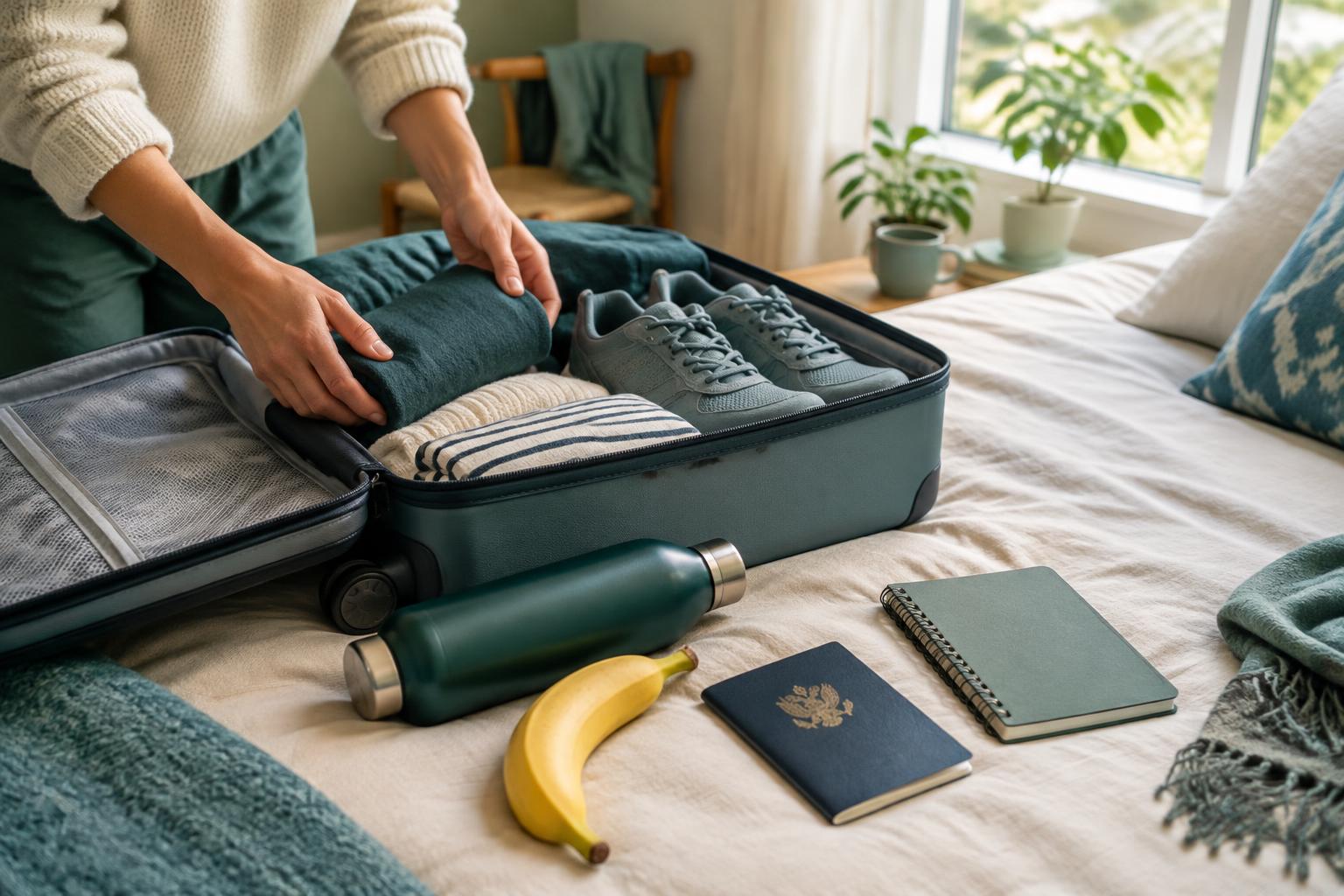
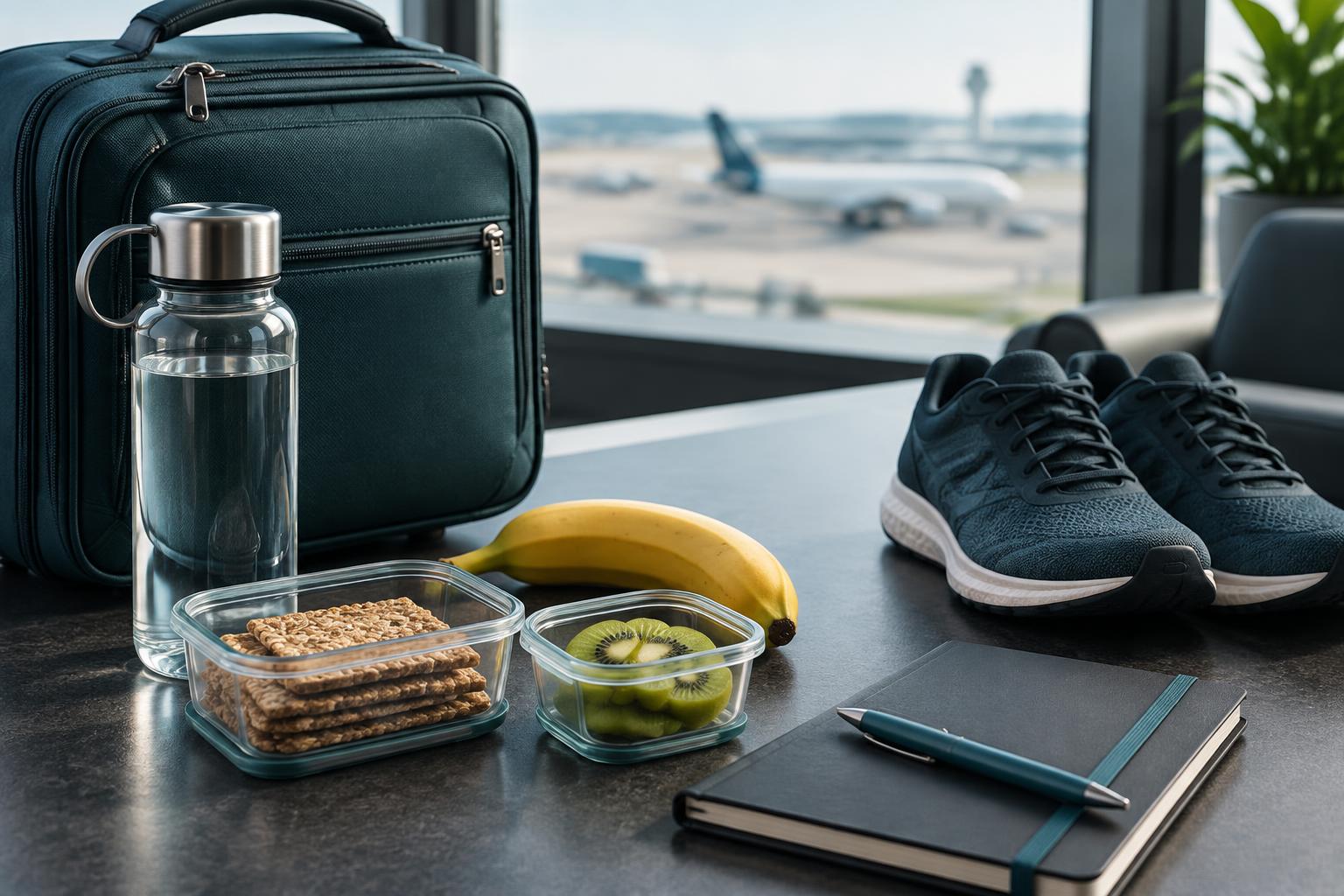
- Carry a familiar snack that suits you.
- Pack medicines in original packaging.
- Check access to safe drinking water.
- Know how to obtain medical help.
- Avoid starting a new restrictive diet just before departure.
A flexible travel-day routine
- 1
Eat something familiar
Avoid arriving extremely hungry and relying on one huge meal.
- 2
Drink steadily
Use safe water and adapt for heat or long journeys.
- 3
Move when practical
Brief comfortable movement can break up long sitting.
- 4
Use local timing
Regular meals and daylight help reset routine.
- 5
Log only useful details
Meal, bowel pattern and key symptoms are enough.
Food and water safety comes first
| Situation | Safer principle | Why |
|---|---|---|
| Water safety uncertain | Use sealed or appropriately treated water | Reduces infection risk |
| Hot food | Eat thoroughly cooked food served hot | Limits prolonged unsafe holding |
| Raw produce | Choose what can be washed or peeled safely | Water may be a source |
| Hand hygiene | Wash before eating | Reduces transmission |
Travel constipation and diarrhoea need different responses
For constipation, restore routine, appropriate fluids, movement and familiar fibre gradually. For diarrhoea, preventing dehydration becomes the priority.
Do not use anti-diarrhoeal medicines blindly when there is high fever or blood in stool; ask a pharmacist or clinician.
Reset gently after returning home
Return to familiar meals, sleep cues and movement rather than attempting a cleanse. A short disruption often settles as routine returns.
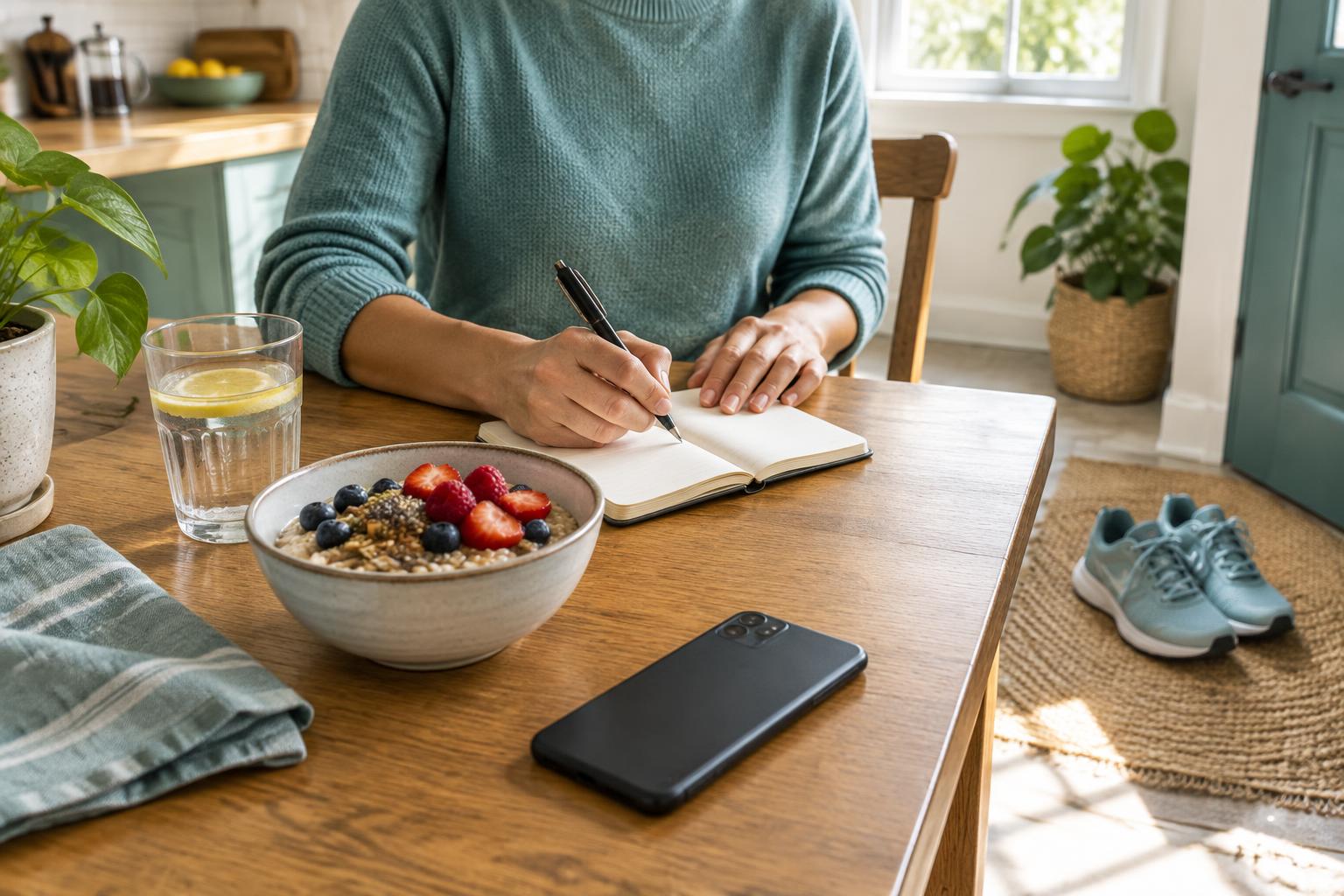
Travel changes several things at once — meals, time zones, sleep and bathroom routine — so it helps to have a record that travels with you. Logging meals, hydration and bowel movements in Gut Pace during a trip, with sleep from a connected wearable, makes it easier to see when your usual pattern returns after you get home.
At a glance
Key takeaways
- Travel changes many gut variables simultaneously.
- Keep a few flexible routine anchors.
- Food and water safety takes priority.
- Constipation and diarrhoea need different strategies.
- Severe infection or dehydration signs require care.
Frequently asked questions
Why do I get constipated when travelling?
Routine, movement, fluids, food and toilet access often change together.
How can I keep regular on a flight?
Use steady safe fluids, comfortable movement and familiar food without forcing a bowel movement.
Should I take probiotics before travel?
Evidence depends on the product and purpose. Ask a clinician rather than relying on a generic travel claim.
What should I eat while travelling?
Choose safe, balanced meals and keep one or two familiar options; there is no universal gut-health travel menu.
How do I manage diarrhoea abroad?
Prioritise safe fluid replacement and seek local medical advice for severe or persistent illness.
Should I keep tracking on holiday?
Only if it remains useful. A brief meal, symptom and bowel note can be enough.
When should travel gut symptoms be checked?
For blood, fever, severe pain, dehydration, persistent vomiting or symptoms that do not settle after travel.
Editorial information
Reviewed by the Gut Pace Editorial Team for evidence-informed wording, practical clarity and appropriate medical-safety guidance.
Last reviewed: Sep 12, 2026
Sources & further reading
This article is for general information only and is not medical advice. It does not diagnose or treat any condition. Speak with a doctor or registered dietitian about persistent, severe or concerning symptoms.